
Find Your Weak Links with the Deadlift Test

This is one of the most important - and ACTIONABLE knowledge nuggets I’ve ever shared in a newsletter. I use “The Deadlift Test” with a lot of the athletes I work with, and it maybe be one of the most insightful tests to see where you stand, and what you need to prioritize in your training. No filler - let’s get right to it.
The Deadlift “Test”
This is a simple 2 part questionnaire.
A: We walk into the gym, and I ask you to select the weight that you’d use for a challenging 3 sets of 8 reps on a deadlift. What weight would you pick?
B: Let’s pretend we walked into the same gym, but I asked you to grab the weight you’d use for 3 sets of 8 reps of a single leg deadlift. What would you pick?
The goal is to score 50% on part B. But keep your numbers in mind as we discuss what this means.
RESULTS: How Can This Test Help?
All athletes are continually asking themselves - What do I really need to work on? Well, this test just made it QUITE clear.
Here’s a scenario I see play out all too often (sample answers):
A: For a deadlift, I’d pick 225.
B: for a single leg deadlift, I’d likely grab a 30lb kettlebell.
You just gave me VERY good insight into how you’ve prepared your body thus far. And more importantly, you told me EXACTLY what your individual limiters are so that we can work on them.
You literally just told me “I’m not weak, but my nervous system can’t effectively use that strength when I do things on one leg”
This is a bit of a problem, as any running based sport demands that you deliver strength and power to the ground every step. I hope you just had a REALLY big ah-ha moment.
Let’s Dig In
A lot of us think “Strength” is everything. We think bigger muscles = stronger. So take your current deadlift of ___lbs. If you train for 8months and actually increase the size of your muscles (the fancy name for this is called cross sectional area) then you should now be able to deadlift a significant % more weight. There should be no surprise here. But is that all there is to strength?
How about jumping and plyometrics? Doing these on both legs helps you drive more force down to the ground to explode up QUICK. So is that all there is to performance?
If the goal is to build CAPACITY (ie build strength and power) doing exercises on BOTH feet is REALLY great. Why? Because your nervous system feels “safe” and you use progressive overload in your training to get stronger and more powerful.
But everything in life isn’t just strength and power. Performance also has to do with SKILL. When you took the Deadlift Test, if you did less than half of your double leg deadlift on your single leg, you just told me that your primary limiter is your lack of stability, not strength. Your nervous system feels wobbly. And when it’s wobbly, it can’t transfer all that strength and power to the ground each and every stride. Running and jumping are all about throwing elastic energy around to your joints. If your legs are stable, then this energy gets transferred really efficiently, and you crush it. Conversely, if you haven’t trained your body to be stable, you get crushed.
This isn’t rocket science. If I asked you to jump as high as possible, you’d jump off of both feet. Not one foot.
But remember, every step, stride, acceleration, deceleration performed in sport requires you to do that on ONE leg.
Take Home
If you are an athlete, you probably don’t really care how much you can deadlift. But you likely DO care if the strength and power training you do carries over and into your sport! (that’s the whole point strength/power/stability training !!)
Building a body that can deliver your peak strength and power into your sport is CRITICAL for performance. And thus it’s critical that we work on those deficits.
Putting this into Action
So if your single leg deadlift was less than half of your double leg, it does NOT mean you are “weak” on one leg. It means that we need to peel back the layers on your lack of stability. And that won’t come from just “trying to go heavier on your single leg deadlift”.
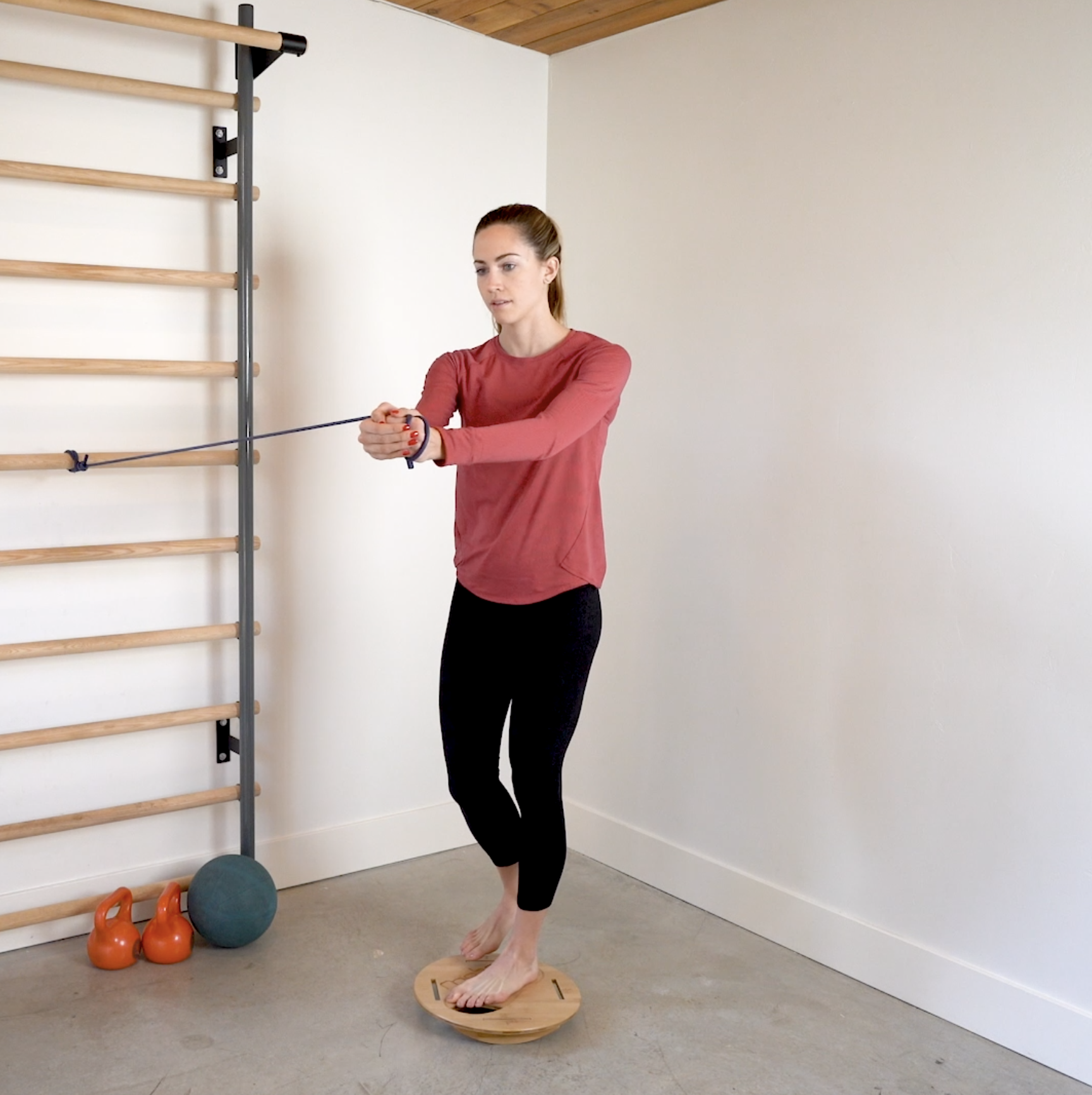
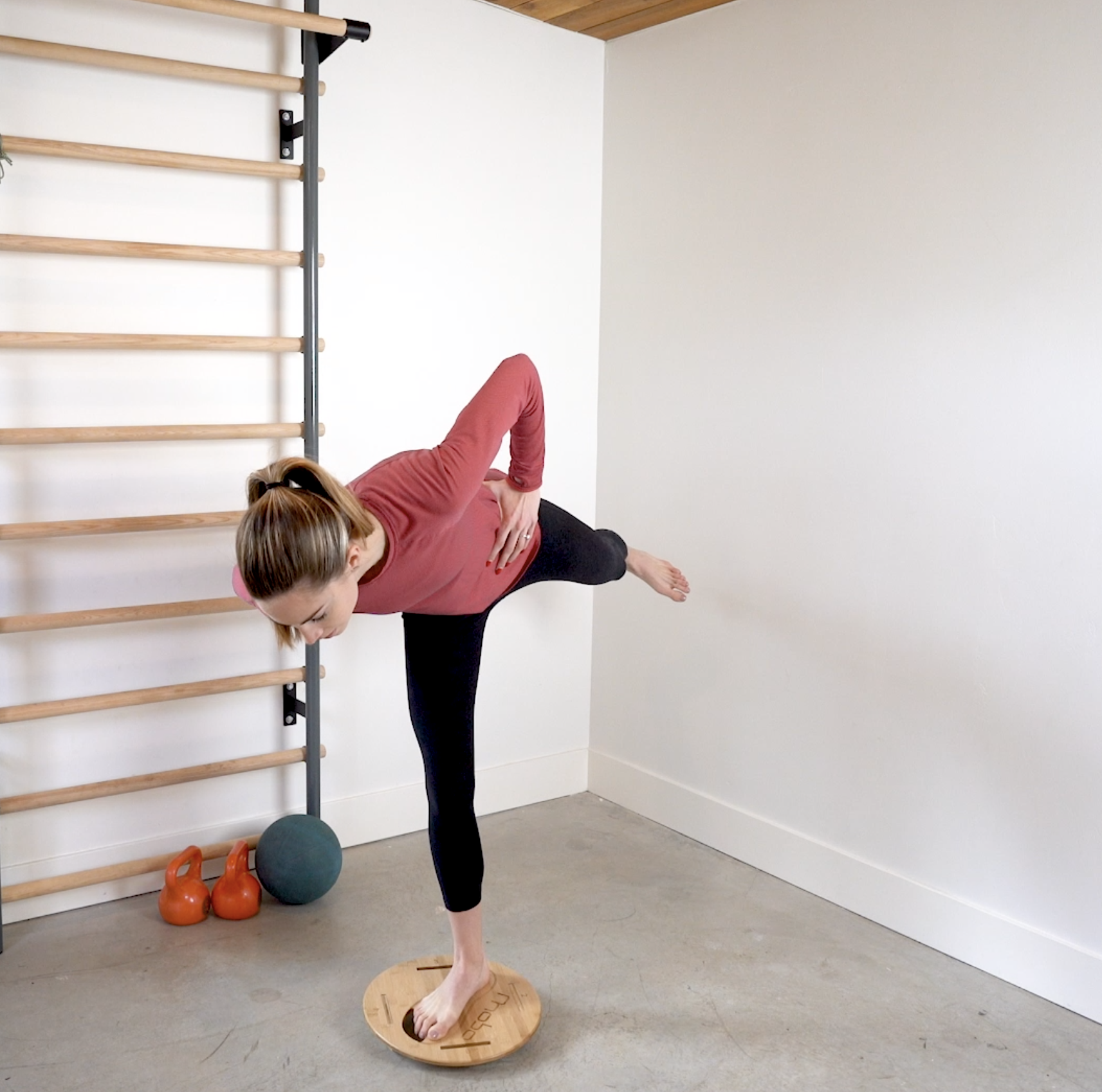
If you scored less than 50% on this test you have a stability problem - not a strength problem! So take a step back and put more time into your MOBO training. It will recruit your body to stabilize the foot, knees, hips, and core to build stability for better control.
While we always have people start with the Foot 6-pack, we have progressions built into the Exercise Page on the Clickable Body. Just click on what your intent is: feet, knees, hips, or core. And spend some time there for a few weeks. I’m willing to bet you see some serious improvement in what you can do on one leg. All training has a purpose - let’s make sure you show up ready for the sports you love by focusing on the right purpose!
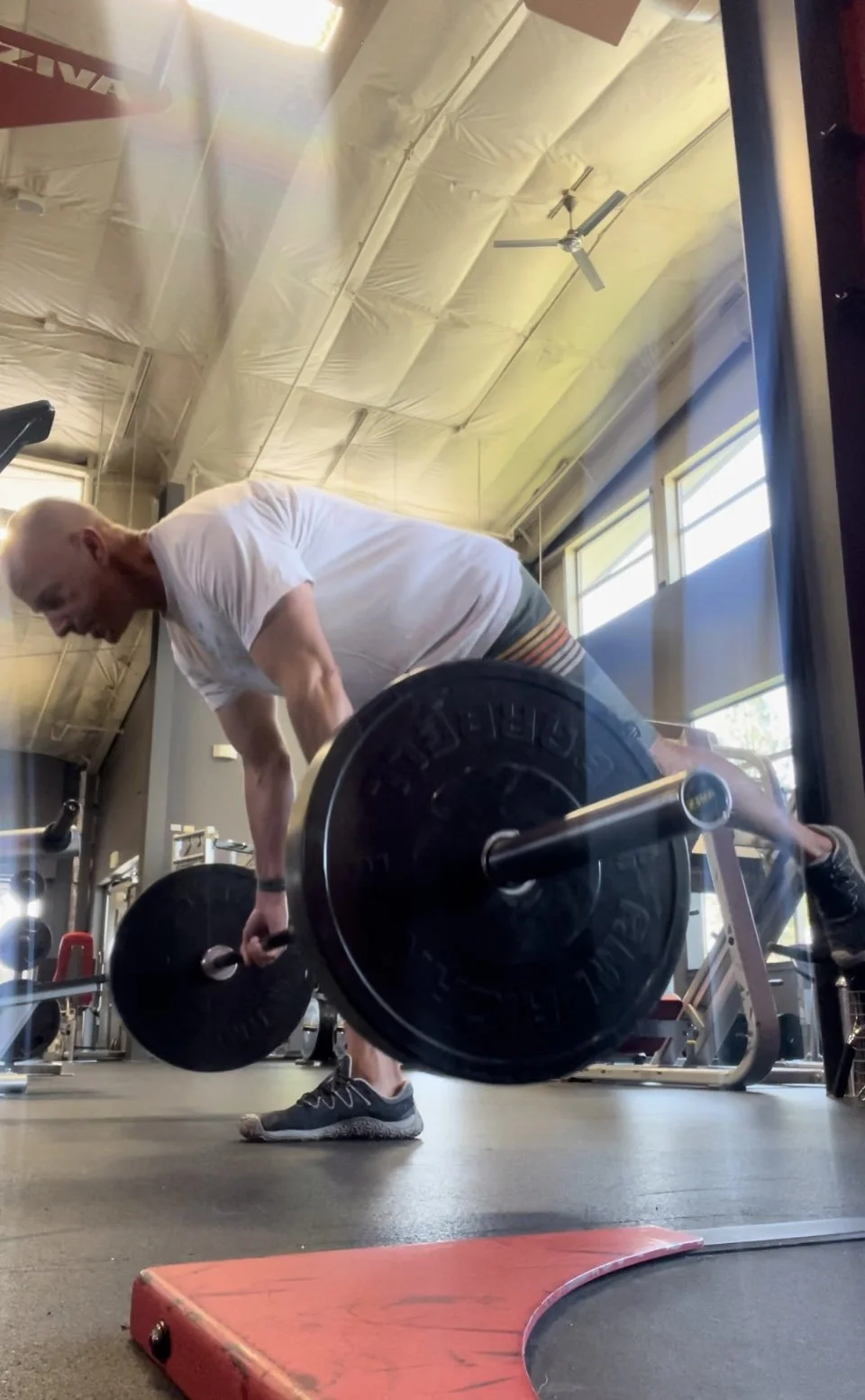
I practice what I preach.
I’m 50 yrs old, and 165 lbs.
My answers for the 3 sets of 8 for The Deadlift Test are 315 for double leg, and 155 for single leg. Roughly 50% - right where I’d like to be.
Caveats
Few pearls here to ensure we are all on the same page.
No, I don’t recommend only training heavy single leg deadlifts. Bilateral strength and power training DO HAVE THEIR PLACE.
the point of this TEST is to help you see how lacking your stability really is.
If you score less than 50%, don’t just “try” to go heavier on your single leg. Remember, your strength isn’t the problem. We are just looking to build stability so you can USE this strength.
Yes, adding an extra point of contact to help with balance (either your hand or free leg on a wall or bench) will help your nervous system feel more stable and thus you’ll be able to lift more weight on one leg. We know this, but that’s not the point of this “test”. The goal of this test is to identify how deficient your stability is.
If there’s any strength coaches reading this, they may scoff and say this is a bad environment to build strength, and training this way is a waste of time. But again, I’ll rephrase this - the reason why it’s not the best environment for most to build strength is because stability is a MAJOR limiter for most people. If you show up stable, its not your primary limiter -and you can build strength in single leg lifts.
This test can be a great set-up to through into your routine. Let’s say your back has been a bit sore for a while, and you are nervous about making your back worse but still want to train legs. Your legs can write checks that your core can’t cash. Doing single leg training means your back doesn’t have to stabilize against as much weight but you can still load your legs.
Lastly- if you do build stability to be able to do these (and you should) I typically have my athletes do these every 2nd or 3rd session in the gym.