The Power of Proprioception: Feeling Movement


Proprio - whaaaat? When we think of moving our body, most of us imagine a “top-down” approach where our brain “tells” us to move a certain body part in a certain way. You can practice this right now by telling your body to touch your thumb to your pinky. It’s a voluntary movement and simple for our brains to actively move us.
But movement also requires INPUT from our body. Imagine picking up a canned beverage. It’s easy for us to lift the can and move it to our mouth, but there’s a lot of detail going on behind the scenes! As you grip the can, your body is FEELING + SENSING the weight and stiffness of the can. Pressure sensors in your fingers and circuits in your muscles are delivering critical information on your movement QUALITY to ensure the beverage inside the can makes its way to your lips. If your body can FEEL this information, you can refine the way you move. If we can’t FEEL, we lack input to our brain, make movement mistakes….and weird things start happening…like crushing the can.
FEELING is Believing
Proprioception is your ability to FEEL how your body moves. It’s not related to muscle strength or endurance. It’s purely a sensory phenomenon. It allows you to feel where you are in space without looking at yourself in a mirror. It tells your brain how movement in your feet is coordinating with movement in your hips and how your spine is moving based on where your pelvis is. Your body parts need to talk. And to move with skill, your brain needs to listen.
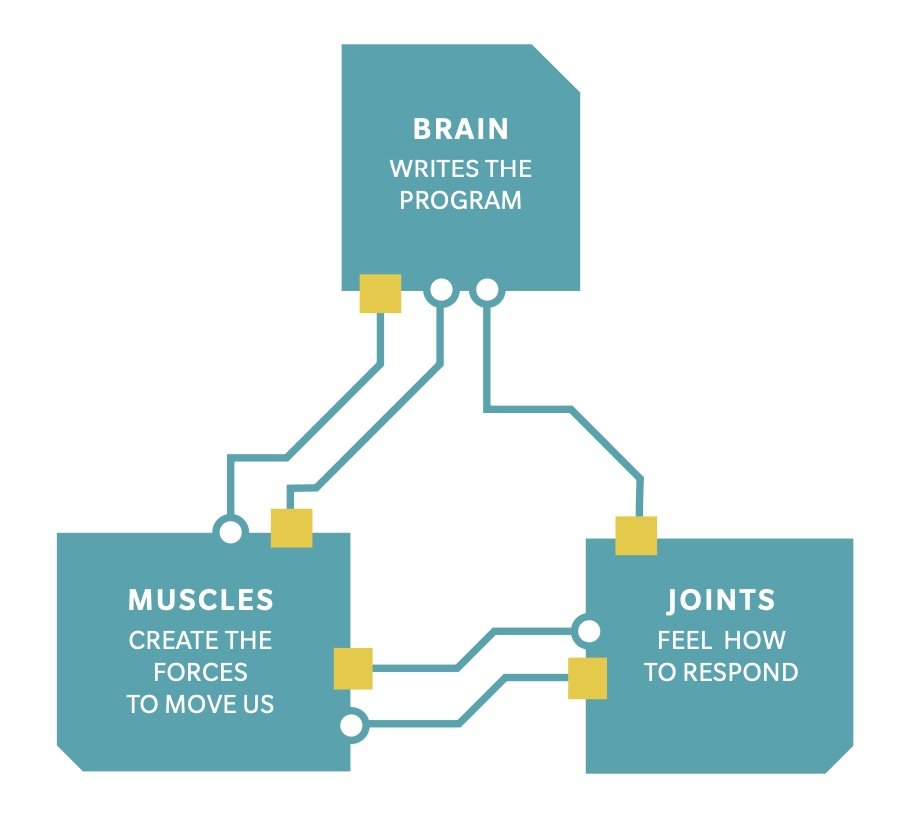
Looking at this diagram from my book Running Rewired, you can see that it’s not just muscle strength that rules the roost. The arrows moving FROM your muscles and joints represent sensory feedback going back to your brain to refine the way you move. The better the feedback, the better your movement.
Feeling Your World
Imagine you are walking along a smooth sidewalk. The surface is consistent, and likewise, your body’s walking pattern is pretty consistent step after step. However, now let’s walk along an irregular trail. Your PROPRIOCEPTION allows you to sense the fact that your foot landed at a 20 degree angle on a rock, landed in a small hole, or slipped a bit as the mud slides underfoot. These sensory fibers are the fastest relay signals in your body! Before you even have a split second to think there was an issue, the relay of proprioceptive information alerted your nervous system to catch this shift in your gait, and adjust your movement to keep you from tripping or falling to the ground. Movement, especially in sport, happens FAST. And it’s critical that we develop a solid line of communication between our brain and body parts to keep us safe.
Building the Skill of Proprioception
The ability for us to sense our own movements seems pretty straightforward, right? So why do I need to practice it? Well…that’s the thing. Our body gets really good at what it practices. And it isn’t good at things we don’t practice. Most of us live a life doing lots of dexterous things with our hands. I can grab my beverage of choice and move it to my lips. Doing things thousands of times a day builds this skill within our hands. Remember, we LEARN through movement!
But when it comes to feet, most of us encase our feet in a sock, and throw it into a shoe and hope for the best. Well, all that stuff between your feet and the ground insulates + dampens this position sense and this impairs the feedback of body position information back up to our brain. Without this valuable feedback relay, we make errors and move weird as we fatigue. And eventually this weird movement (that we can’t sense) places increased strain through your achilles. Or your plantar fascia. Or your shin. Or maybe so severely impaired that we sprain an ankle. Or those of you who sprain over and over again continue to do so because this position sense relay system is busted. BUT, it doesn’t have to be this way. You can learn to MOVE BETTER by practicing moving better!
All Surfaces Aren’t the Same
What’s the best training environment? There’s a lot of balance tools see out there. I’m not here to talk negative about anyone else’s tools and products. However, all unstable surfaces aren’t the same, and I want you to select the right tool for the job to get the most out of your time invested.
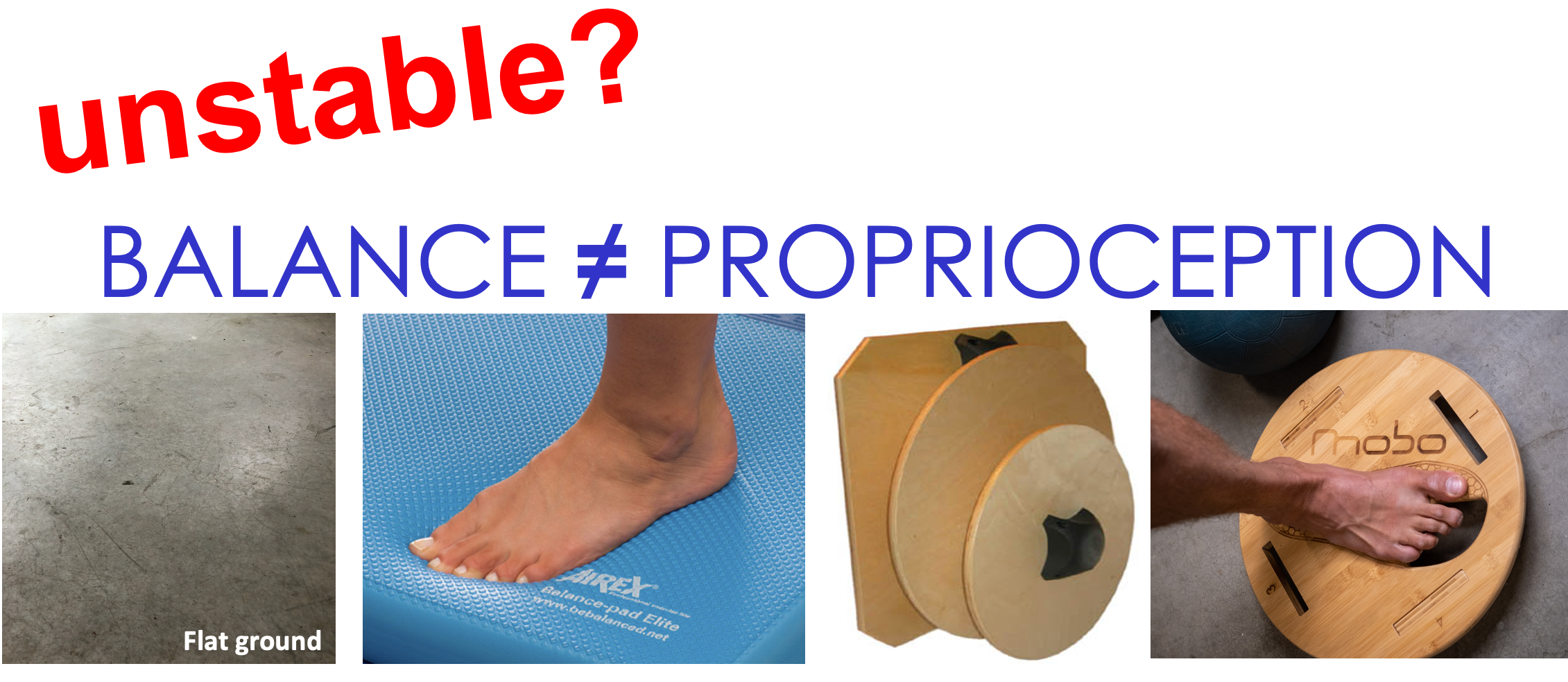
Flat Ground: a solid firm environment delivers consistent sensory information to your feet which is great. However, it doesn’t provide any specific stimulus to cue you to build a solid stability strategy in your foot + ankle. You basically just reinforce a lot of bad habits you’ve built over the years while on one leg.
Soft Squishy Pads: The research shows that a soft squishy environment actually mutes position sense feedback to your brain. Sure its hard to stand on soft squishy surfaces because your feet aren’t getting good information on what’s happening and how to correct it. Thus, you aren’t training sensory information; in fact you are removing it. Not a good method if your goal is to build skill! Also, research shows that training on soft surfaces actually impairs the elasticity and explosive force generations skills. This is a big negative if you are an athlete!
Wobble boards + BOSU upside-down: “What’s harder isn’t always better.” By pivoting in multiple directions, these devices do challenge full body “balance” but at the expense of individual joint skill building. Translation: they allow you to practice “not falling over” by shifting your trunk, hips, or finding a position of balance with the board kicked off way over to the side. Again, not the most optimal learning environment to build proprioception.
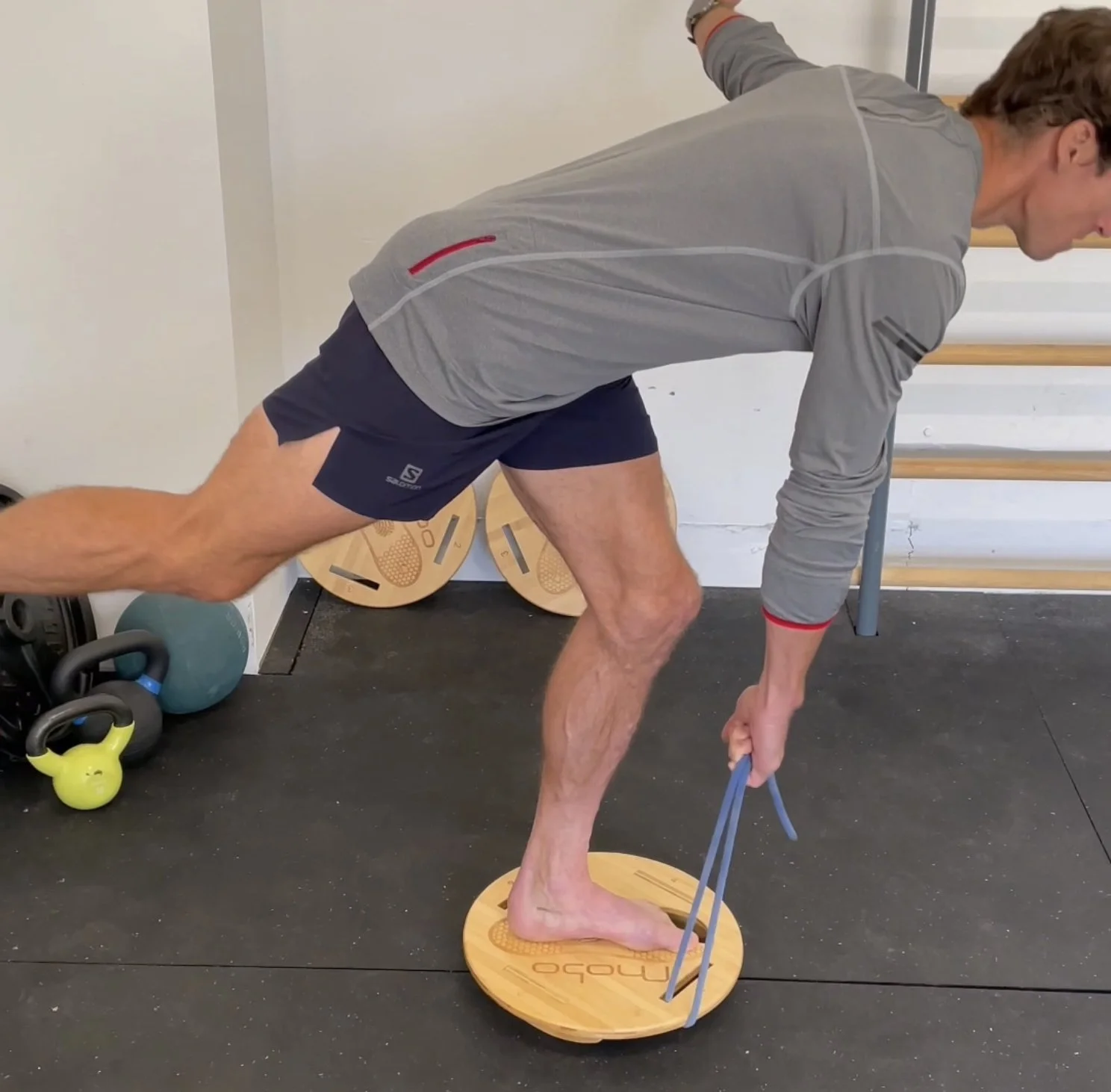
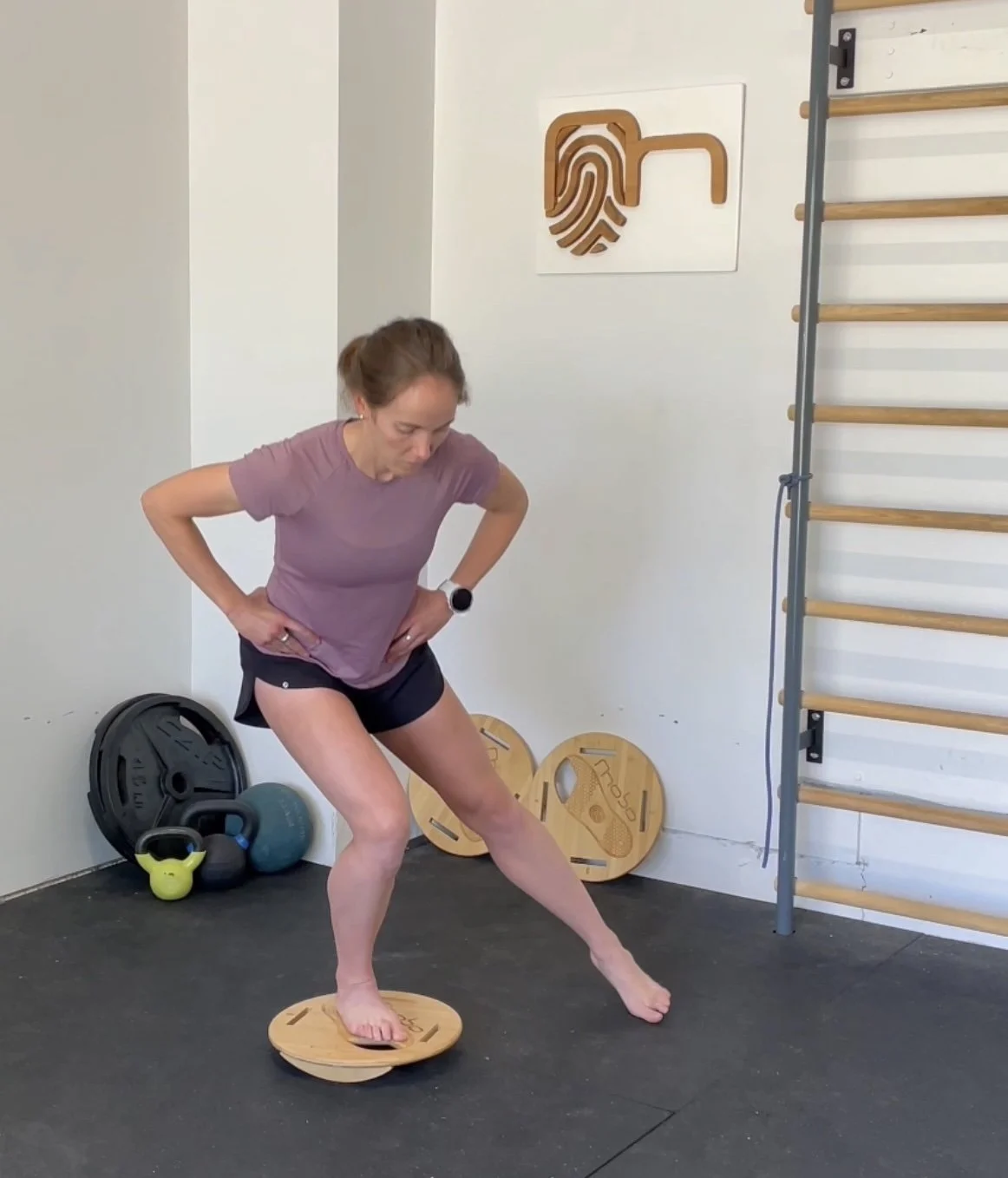
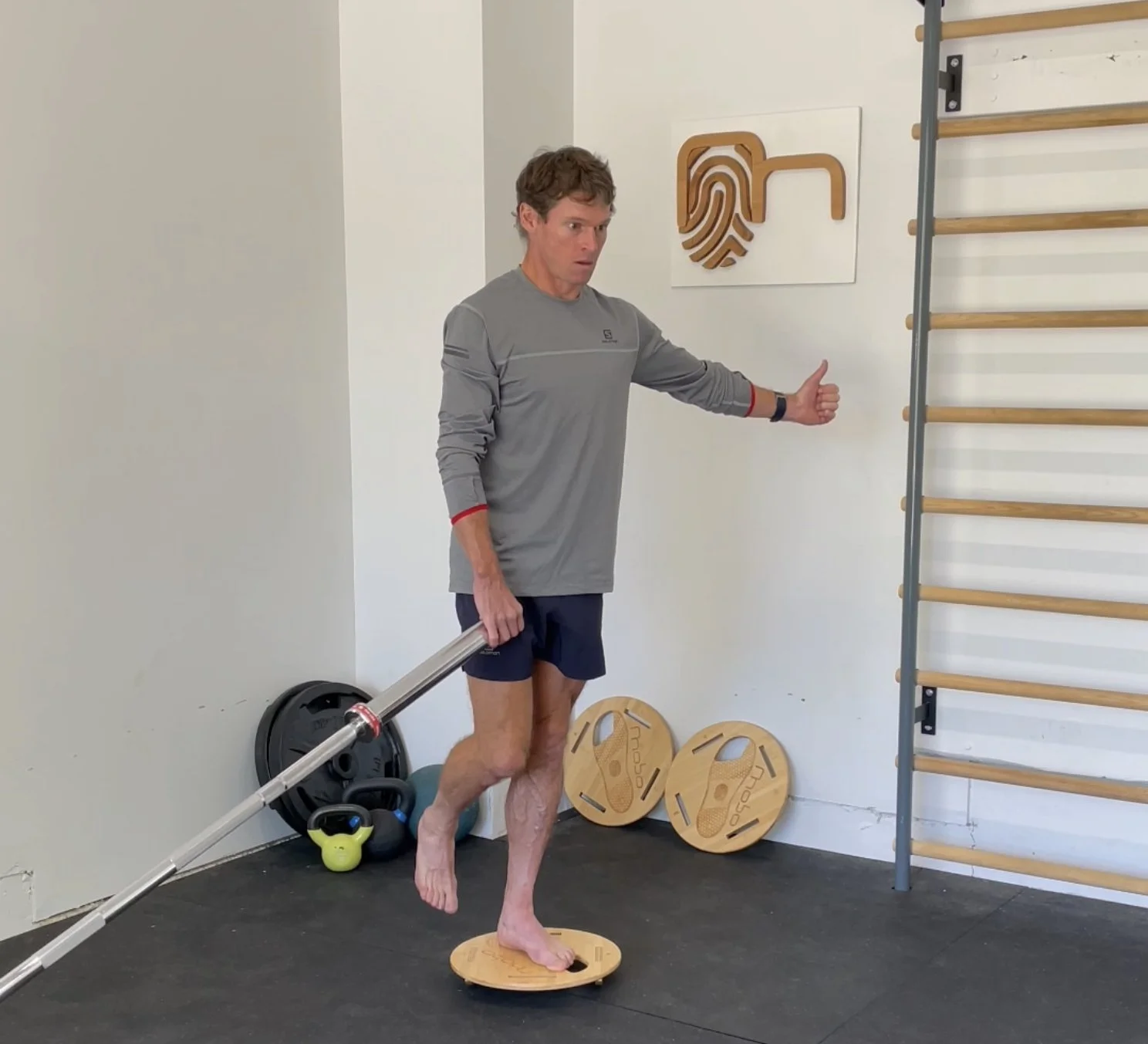
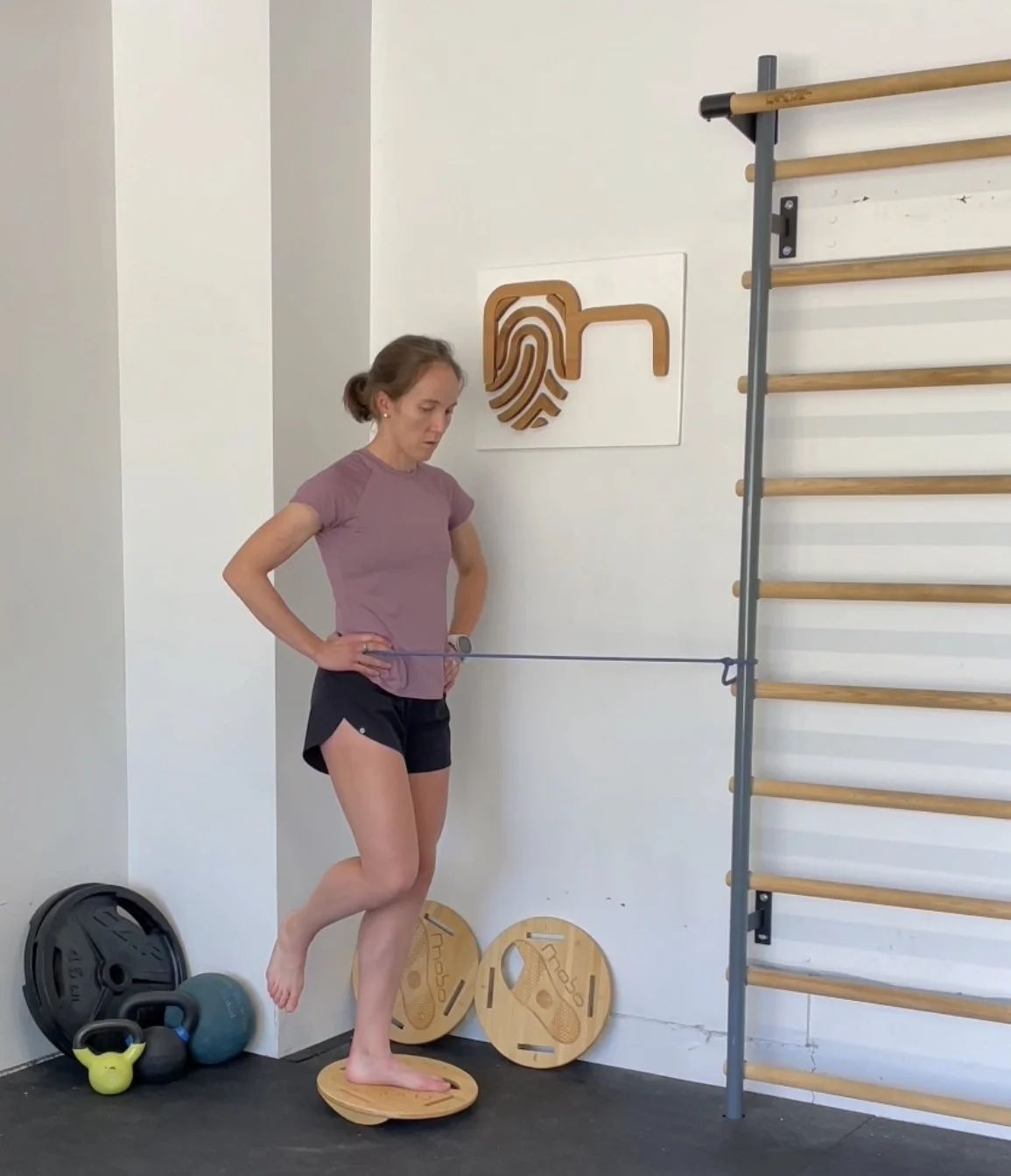
MOBO: a firm platform to ensure consistent information underfoot. The texture increases sensory feedback to your brain. The rocking of the board is oriented to train feedback through the way your foot naturally pronates and supinates. And the cut out under the toes cues you to build specific foot specific skill.
MOBO Makes It Happen
All unstable environments aren’t the same. You have enough to worry about, and we created the best environment to build proprioception. MOBO was created to optimize the feedback loop to optimize your results. Better than a BOSU, and Better than an airex pad.
To improve the skill of proprioception, it’s always best to practice frequently in small doses. Thus, it’s better to get on your MOBO for 5-10 minutes most days a week rather than knock out one 45 minute session a week. As far as WHAT to do, check out the EXERCISES page. The cool thing about exposing your body to new challenges through play and movement helps your learn lifelong skills that transfer to everything you love to do.