
Why You Don’t Overpronate
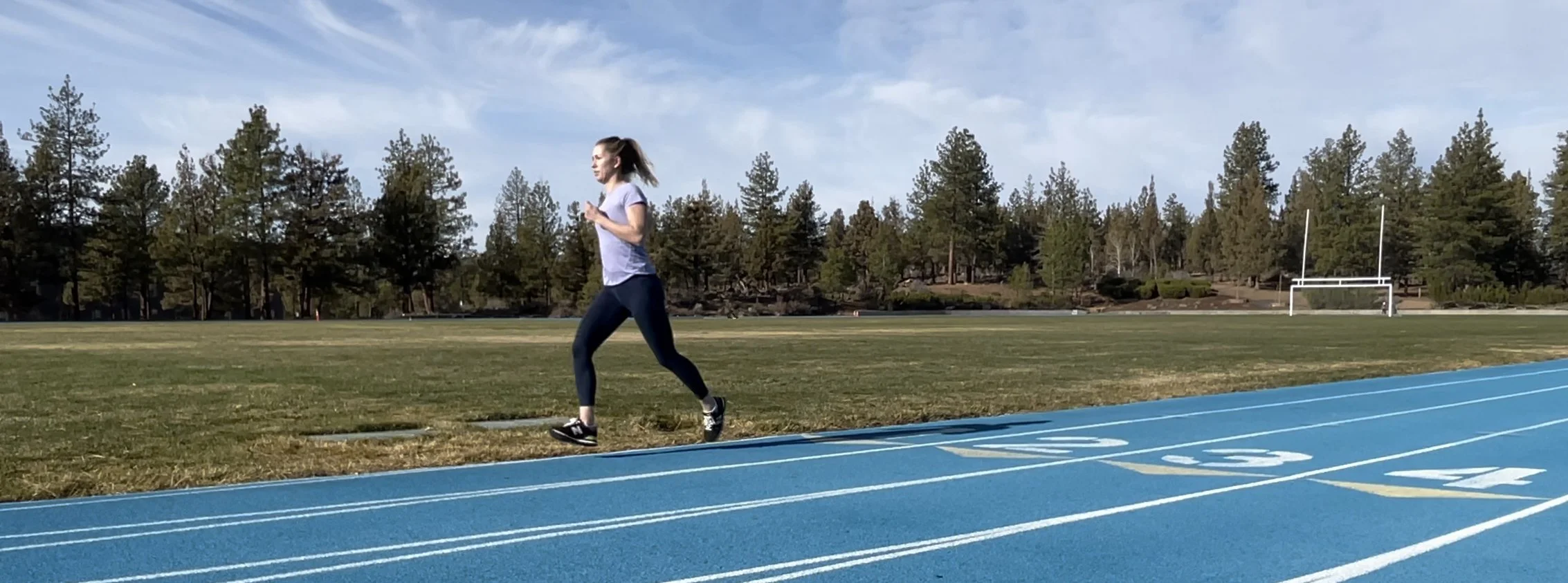
If you are reading this, you likely have body parts that move. Your spine flexes back and forth. Your hips twist, move in and out, front and back. Your knees move back and forth and your ankle pushes you forward. And your foot moves too…in pronation and supination!
These aren’t scary terms. People don’t get scared of the words “bend, flex, twist” — so why do they get scared of the words pronate and supinate? how many of you have been told that you are an overpronator? or oversupinator?
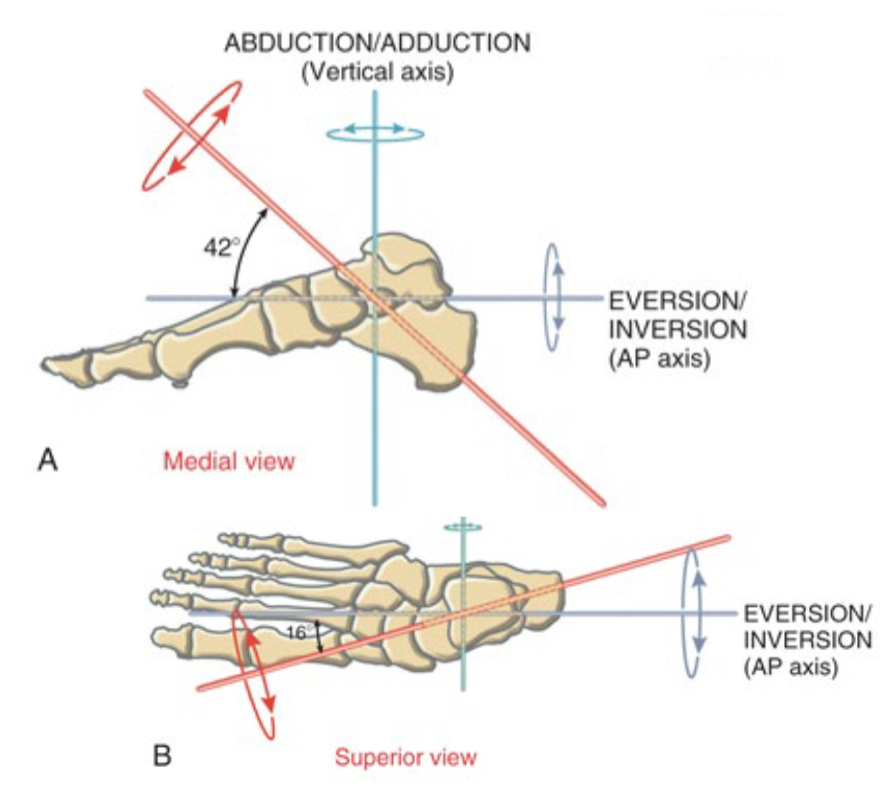
I think most of this comes down to understanding and semantics. We tend to think in global terms — we move forward, turn, and cut sideways. Those are major directions that we can wrap our heads around, and most body parts follow this path. But feet are different; they have lots of parts, 26 to be exact. And the main axis in which they adapt to the ground isn’t oriented straight ahead, but rather about 45 degrees off to the side and about 15 degrees up off the floor. Since the axis of the joint is shifted quite a bit off of a straight, planar motion, they don’t move in a one absolute plane of motion, but through all three planes at once. And this is called PRONATION and SUPINATION. These words are just used to describe the motion, and they aren’t negative in any way!
Contact Points Matter
Rock climbers adapt their hands to the rocks in various ways to establish a firm contact point. We don’t say they “over grip” as they adapt their hand to the the rock. Likewise for walking, running, cutting, and jumping we don’t “over-pronate” as your foot adapts to the ground - you move your foot ENOUGH to get a solid foundation. And I’ll jump ahead here…I’ve been at this for 25 years, and many research studies have come before me. There isn’t a solid research study out there that has established a powerful connection to the AMOUNT of motion at the feet (pronation/supination) and injury or performance. Period.
But if you are a rock climber and you can’t produce enough force to hold onto the rock, you go tumbling down. You failed to control your connection point…and that’s bad.
Likewise, If you are walking, running, cutting, and jumping on your feet, and you can’t control how quickly and forcefully you pronate and supinate in your feet, that can lead to tissue overload…and that’s bad as well. And to jump ahead, research does support findings that the RATE of pronation and supination in your feet, and how this influences body parts up the chain, DOES matter.
So let’s stop stressing about the motion and these terms. The amount of pronation in your foot is fine. It’s how well you CONTROL it that’s key. You need to control the motion in your knee just like you need to control the motion in your feet. Let’s ensure that we all build solid SKILL in the way we control our feet!
3 Ways to Build Skill in Your Pronation + Supination
You’ll notice that your MOBO rotates around a funny 45 degree angle out from the midline of your foot, and tilts about 15 degrees up and down. Remember that picture above? Yes, we designed the tilt of your MOBO to match the exact architecture of your foot. Pretty cool huh?
Let’s get ROCKING! One of the most critical moves on a MOBO is guiding your foot through pronation and supination under CONTROL. We’ve got 3 versions of FOOT ROCKS to meet you where you are, and progress you forward when you’re ready. If you’d like to see them in action, check out videos for each on the EXERCISES page.
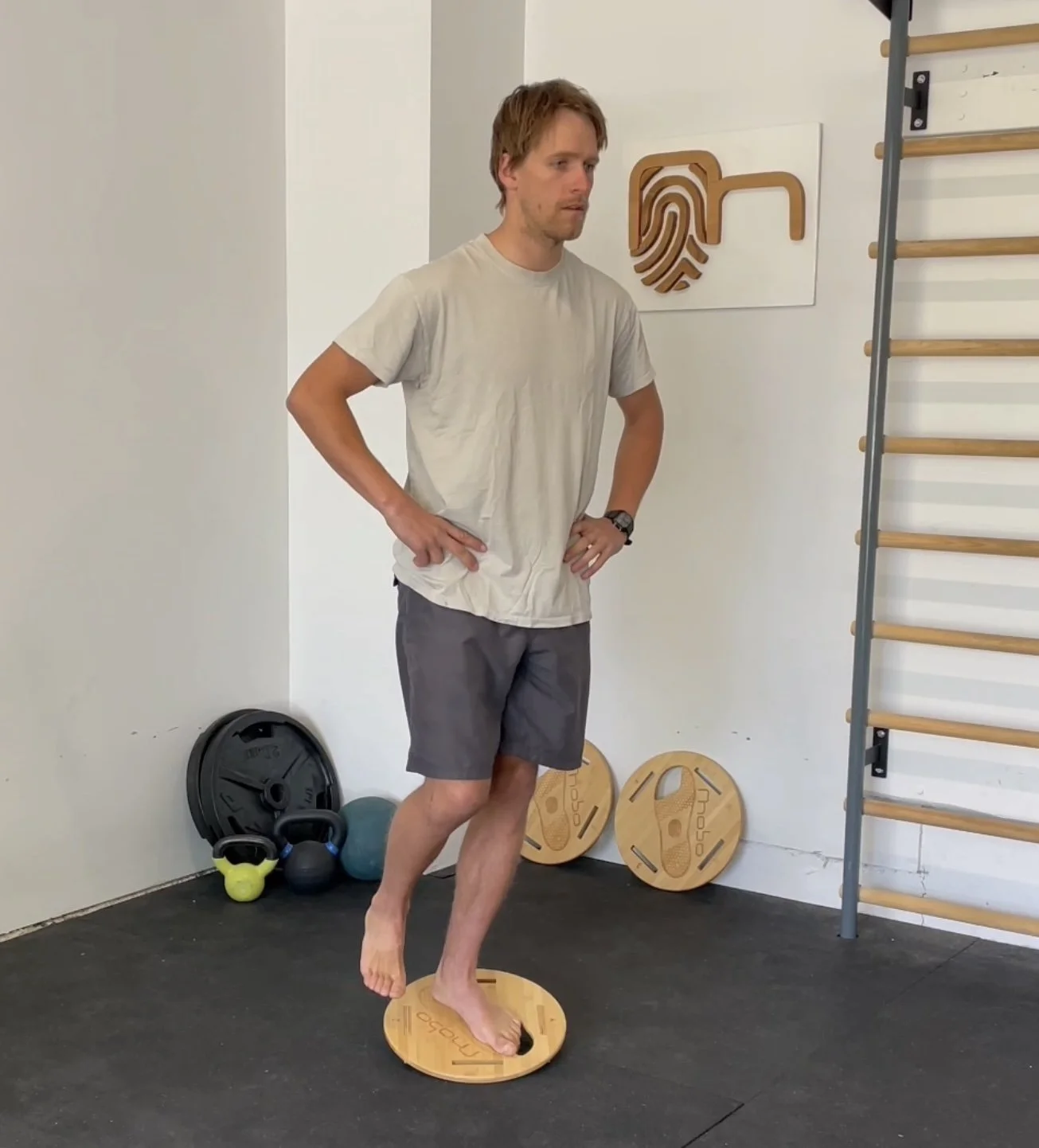
The FOOT ROCKS in our Foot 6-pack section of our website are the portal to help you build control of this motion. You step on, and rock back and forth using both the EVEN fin slots, and the ODD fin slots. Its a staple. It demands you balance not just from wobbling around in space, but building a specific strategy within your foot. .
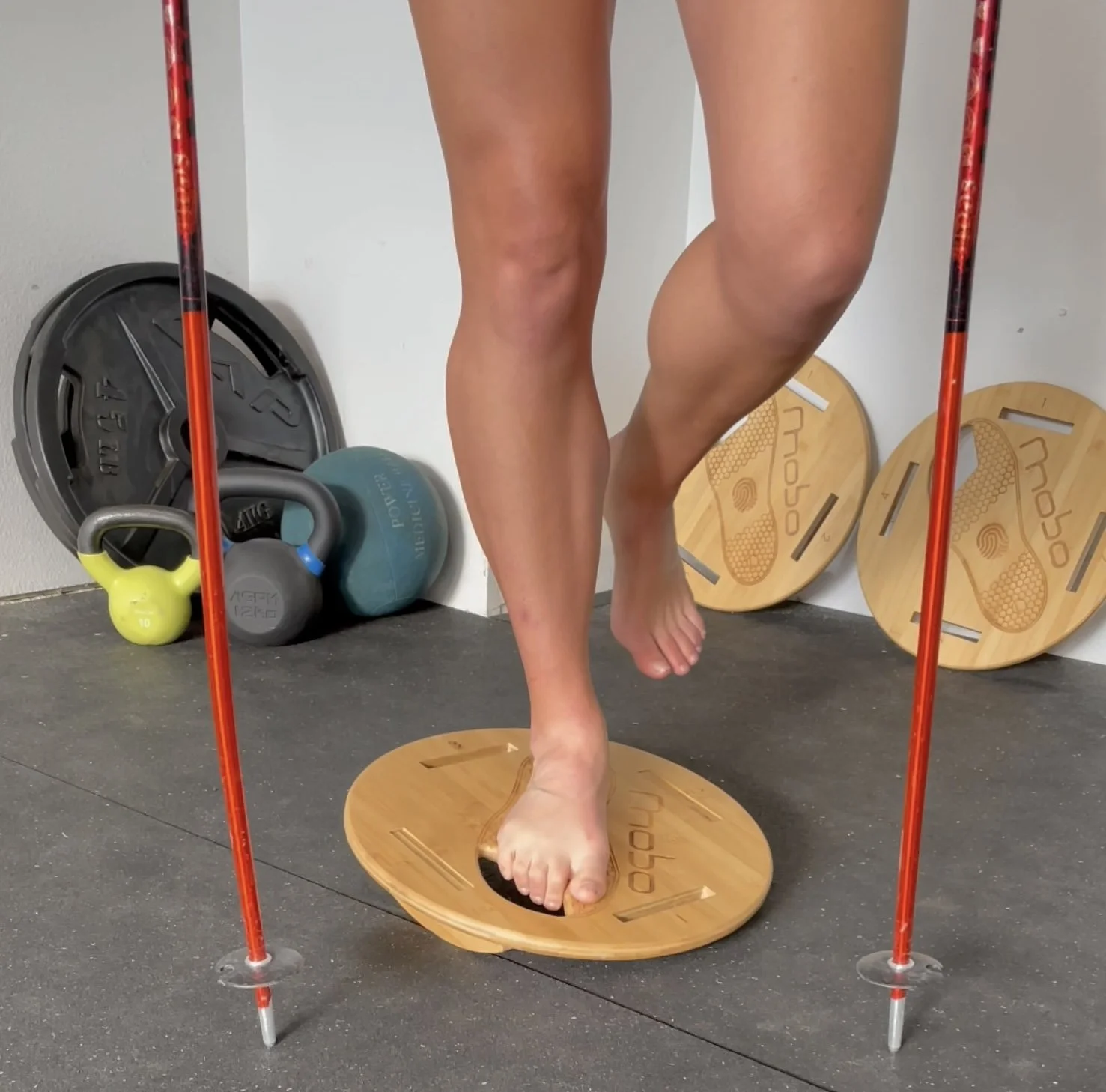
Is that too hard? Everyone is at different places in life, and some of you may find the foot rocks too demanding. If so, we can regress them to ensure you nail the basics! For this, all you need to do is use your arms to reduce the whole body balance instability, and help you focus on your feet. We used ski poles in our POLE FOOT ROCK video, but brooms or a wall work fine as well. After a handful of sessions, you’ll be able to progress and drop the contact with your hands.
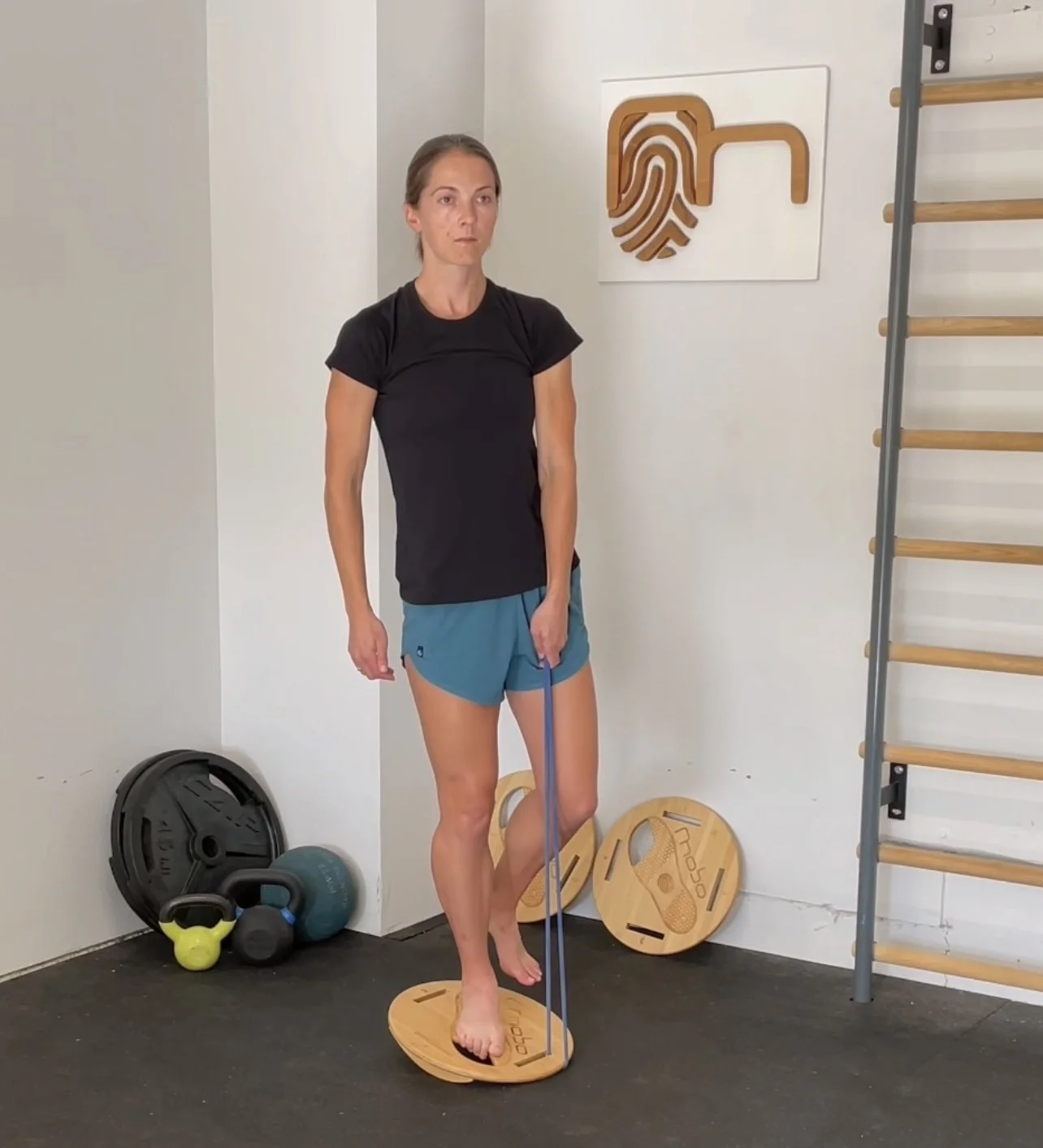
Do you need a little extra challenge? Once you learn control of motion, its time to LOAD IT. Our BANDED FOOT ROCK exercise will provide an extra challenge for you. Interestingly, it actually makes the balance component easier, but it will build strength through this motion better. If you are ready for these, we suggest splitting time between the regular foot rocks (no band) and the banded foot rocks to ensure you maintain balance skill on one day, and then the next session give loading it a try.
You aren’t an over pronator, or an over supinator. You are a person who needs control over movement in your feet. And that a skill that anyone can build on a MOBO!