
Unlock the Full Potential of Your Feet
Stick around long enough, and you’ll start seeing patterns. After 25+ years in the trenches, working with thousands of feet, one thing is clear: we talk a lot about stability, but mobility is just as critical.
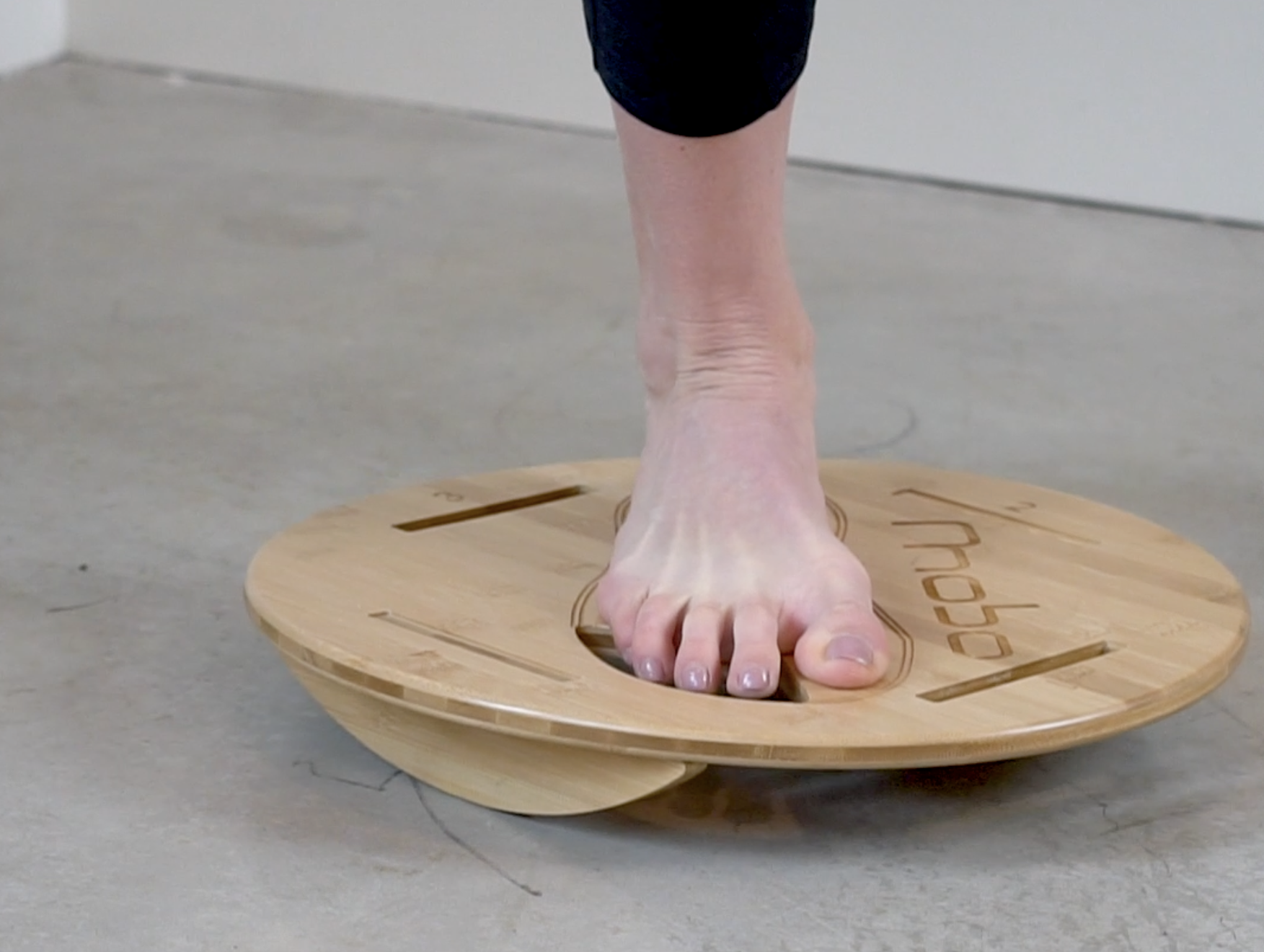
Stiff Feet Don’t Move Well
Here’s the deal: most people don’t stand the way they move. When standing on one foot, a lot of people shift all their weight to the outside edge. You can get away with this while standing still, but the moment you need to move—walk, run, jump—this rigid, wobbly strategy falls apart. Your foot isn’t a brick; it’s an adaptable lever. And if it can’t move well, it won’t stabilize well either.
That’s where the WEDGE comes in.
For your foot to function correctly, you need to shift force from the outer edge through the ball of your big toe. Every single study on healthy foot mechanics shows this is how force should travel when you walk, run, and jump. If it doesn’t? You’re fighting an uphill battle against poor balance, decreased stability, pain, and inefficient movement patterns.
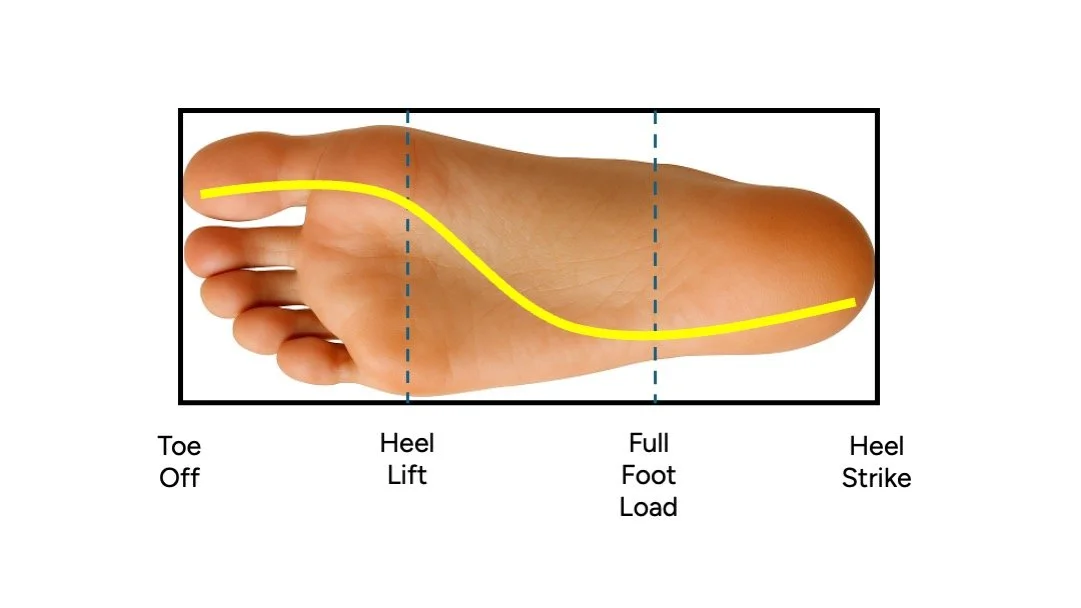
This shows the path of the force moving through a healthy foot. If stiffness is preventing you from getting contact under your big toe, its going to be REALLY tough time trying to build stability within your foot.
If this looks like a clip out of the video on our homepage, it’s because it is. This is great visual for EXACTLY how the pressure moves through a healthy foot.
People Get Stuck
(and why the WEDGE helps)
Somewhere between 1/3 and 1/2 of the people I’ve seen with foot and lower leg issues can’t shift their weight properly because their outer foot is stiff. That means they don’t just need more stability—they need better mobility first. Said simply: if your foot is locked up, you’ll get way more (and faster) progress by mobilizing a few minutes before training stability.
Why Do Some People Have Stiff Feet?
There are three main reasons:
1. Anatomy – Your first three toes each have their own midfoot bone. Your fourth and fifth? They share one (the cuboid). That means they naturally move less. But they should still move!
2. Joints Need Motion to Stay Healthy – Unlike muscles, joints don’t get nutrition from blood flow. They rely on movement to circulate lubricating fluid. If they’re stuck, they don’t get the nutrients they need. And if joints don’t feel well, they don’t move well.
3. Muscle Guarding – No, you’re not “breaking up scar tissue” with a foam roller or massage gun (your tissue is 10x stronger than steel). What you are doing is sending a signal to your brain saying, “Hey, maybe we don’t need to be locked up so tight all the time. Let’s relax.” The WEDGE helps reinforce that message in a way that directly improves movement.
The WEDGE is Different Than a Ball
Let’s clear this up: I’m not here to trash other tools. If a lacrosse ball or knobby ball feels good, use it. But the WEDGE is built different.
A LAX ball massages and compresses tissue, helping muscles relax. That’s great. But if you’re stuck standing on the outer edge of your foot, the real issue isn’t just muscle tightness—it’s joint restriction. Your outer foot is stiff, and it’s blocking you from shifting weight properly.
The WEDGE is designed to fix that. It gets your lateral foot joints moving, releases unnecessary muscle guarding, and helps you naturally feel pressure under your big toe—without forcing it. When you do this, everything downstream improves: stability training becomes more effective, movement efficiency increases, and foot pain decreases. And you’ll get better outcomes from training on your MOBO board!
THE TEST!
Stand on one leg, and ask yourself if your balance point is on the outside of the foot, evenly through the foot, or if you tend to fall to the inside of the foot. If you are "inside or even across the foot” jump right on your MOBO to train and build stability. No need to add extra mobility work.
But if you wobble to the outside of your foot, start with the 2 releases below to open up your foot before using your MOBO, and one stability move to help you build control around your new foot mobility to break the cycle.
And remember to check both feet! – we aren’t always the same left vs right.
THE FIX (es)
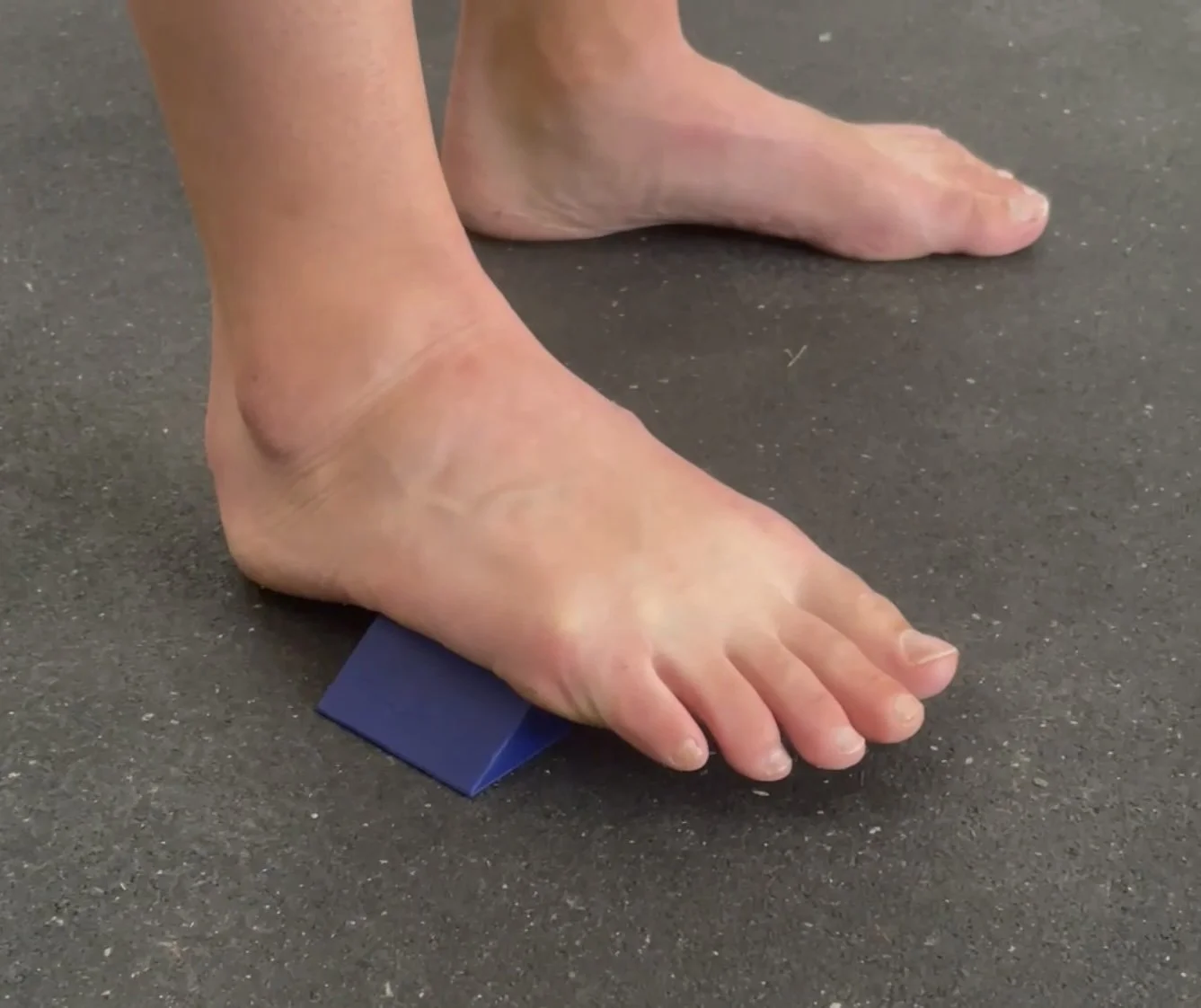
Lateral Foot Release
Place the wedge under your foot between the 4th and 5th metatarsals about halfway between your heel and forefoot. Keep even weight on both feet with them pointed straight ahead, and heel on the ground. Then rotate the pelvis and trunk right and left for about 90 seconds. This may be sore on the first few sessions..
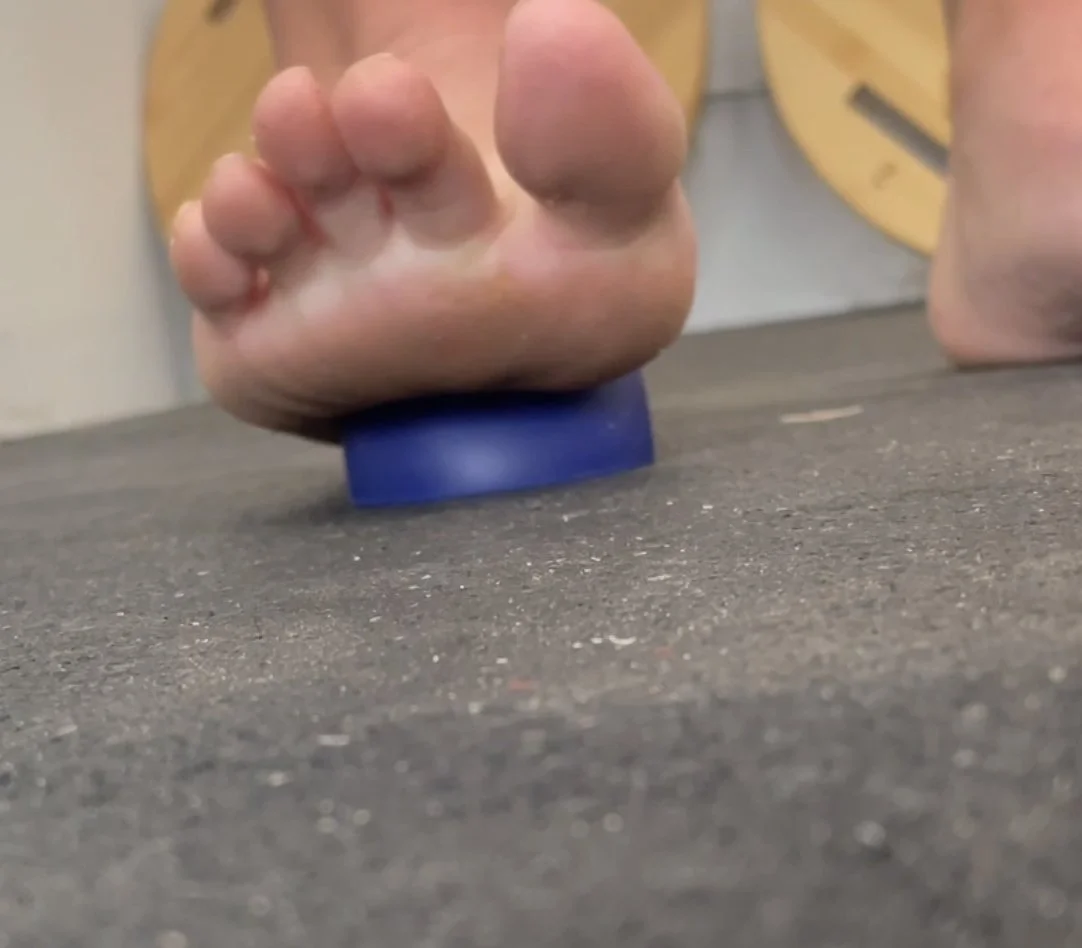
Transverse Arch Release
Place the wedge underfoot so that it’s in the middle and just behind the ball of the foot. Now stand with equal weight on each foot with heels planted on the ground. Now flex the toes up and down to mobilize the bottom of your foot. Repeat this motion for 90 seconds
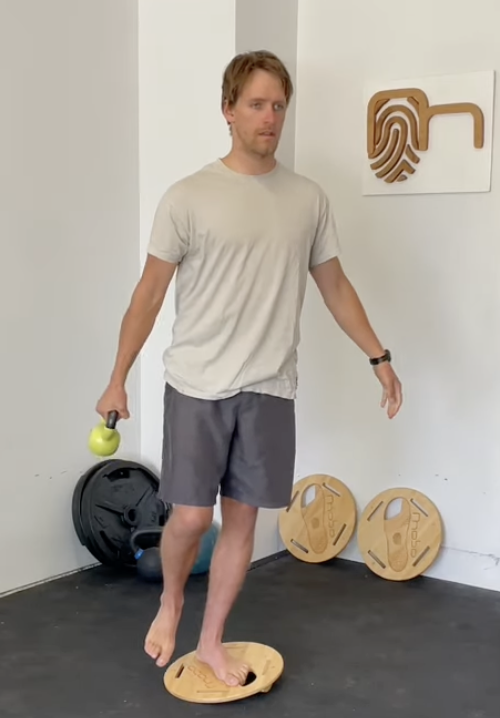
Everted Pass Around
Fins go in the OUTSIDE slots 3+4. The board will not rock, rather it will remain stationary. The outer part of your foot is high, and the inner part of your foot is low. For this exercise you are just going to grab a kettle bell or gallon of water, and just pass back and forth for 2 min. You’ll breaking habits of shifting outward and focus on keeping weight on the inside of your foot.
Your Call to Action
This foot UNLOCK is one of the biggest wins you’ll ever do. Here’s how I’ve used it in my clinical practice for a decade.
If you are one of the people who failed the “Is your foot locked test” (feeling most of your weight on your outer foot when standing on one foot) then do these 3UNLOCK exercises BEFORE you run or train on your MOBO. Remember the goal is to put a tuple and mobile foot into your training or sport. That whole sequence takes about 4 min tops. You have 4 min.
After you do these 3 FIXES, stand on one foot again —> you should feel more grounded and weight more spread evenly through the ball of your foot.
After about 1-3 weeks, of this, PLUS solid work on building stability on your MOBO Board, you’ll notice that you start to weight more even across your foot, and once you feel that, there’s no need to do this series pre-workout an longer.
If you are someone who feels EQUAL weight across the ball of your feet from inside to outside, then you did NOT fail the test, and there’s no real “need” to do this before your MOBO Board training or before activity.
Everything is a process, but with consistency, you’ll FEEL change and improvement!