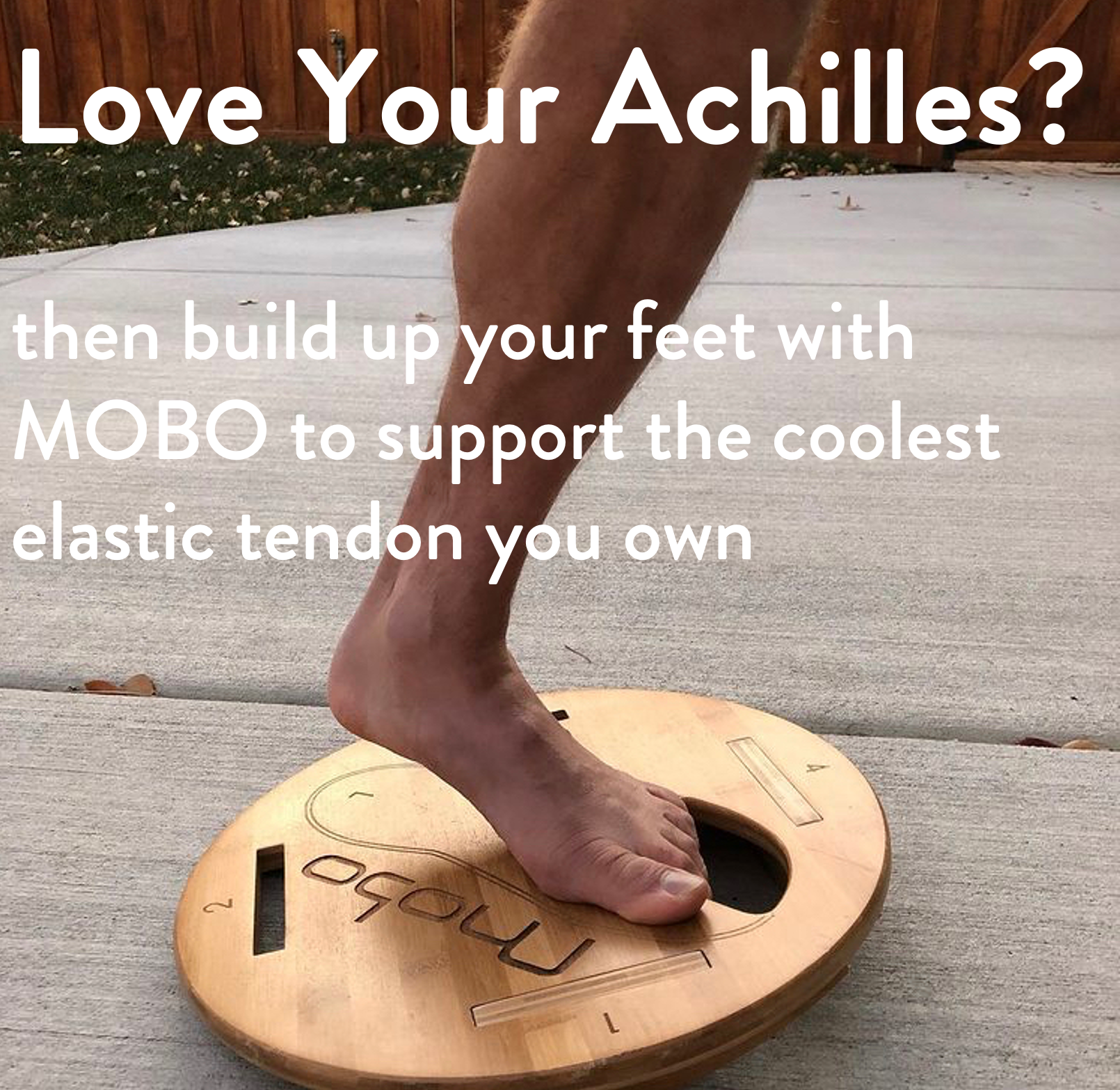
Why Does my Achilles Hurt: Part 1
Don’t let your achilles heel be your achilles heel!
In greek mythology, we’ve learned that the achilles was a weak spot…..but in reality, let’s reflect on the idea that your achilles is just a body part, and is NOT an inherent weak spot! Achilles help is high on the list from requests from you. This is a BIG topic I wish more people understood, so we are breaking this up into 2 parts. Today we’ll build understanding into the biomechanics that overload our achilles, and next month, we’ll get a bit deeper into how to build a better tendon. Let’s go!
What is Your Achilles Tendon?
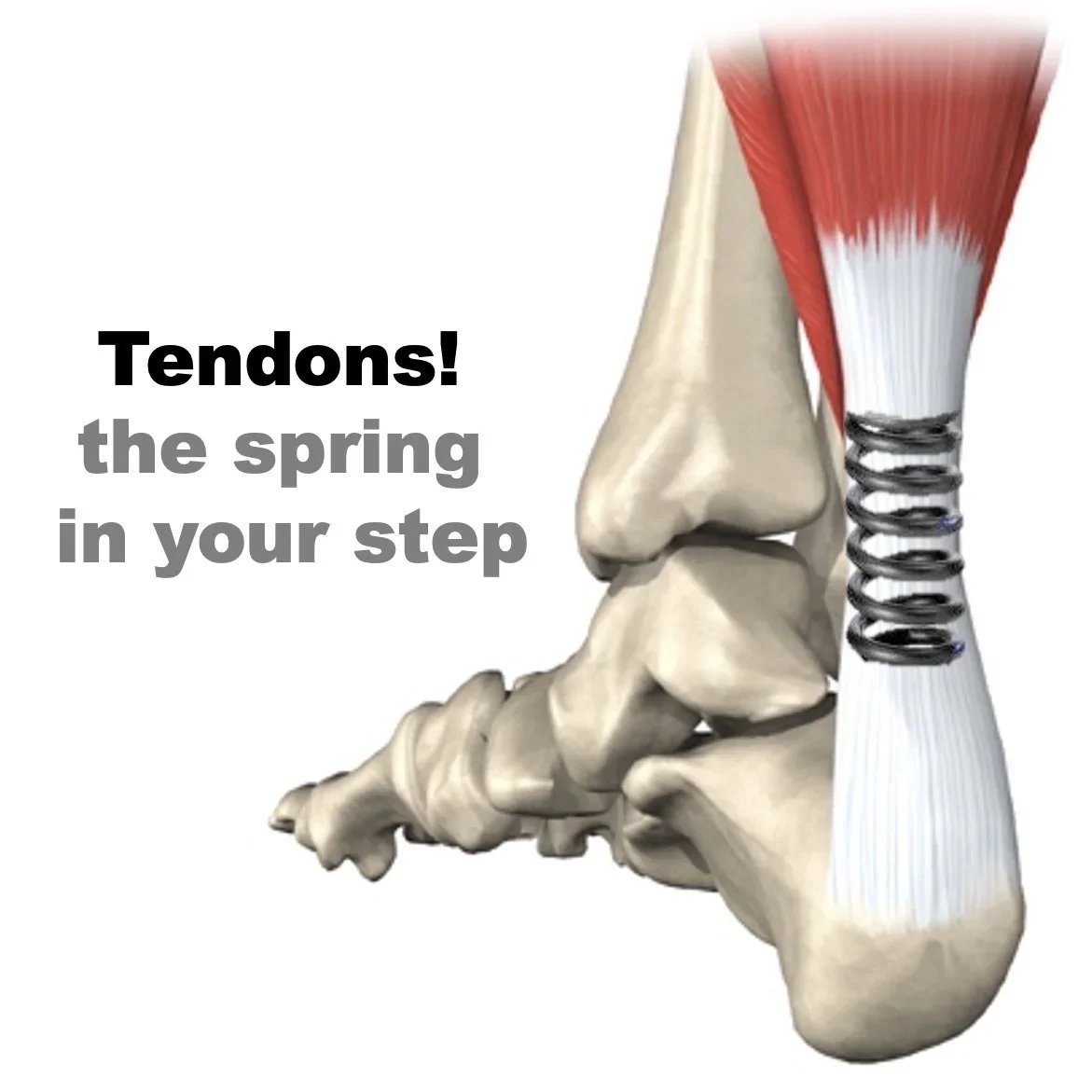
Tendons are big rubber bands that connect your muscles to your bones. As you can see from this picture, they are continuous with your muscle. Calf muscle fibers transition into these elastic fibers that make up your achilles tendon. You create active tension in your muscles (you actively contract and shorten muscles) and your tendons store energy as they get stretched and release that energy as they recoil. When running, your muscles don’t actually change much in length- they actually HOLD position in a mostly isometric contraction, while the energy stored and released in your tendon actually creates most of the mechanical work to propel us along.
Why is the Achilles Often Hurt?
People don’t get hurt because they do gradual progressive exercise. They get hurt because they make poor decisions on how they control and stabilize their body. In our biomechanics lab, we can measure that muscle and tendons are under a lot of load – when running, you get about 6-8x your body weight loading your calf muscles and your achilles tendon. Yes, that’s a lot of load on those structures each and every stride. But your body can adapt to this load. So a singular focus on load misses a REALY big part of the problem. If we look at WHY the achilles gets overloaded, it really comes down to strategy.
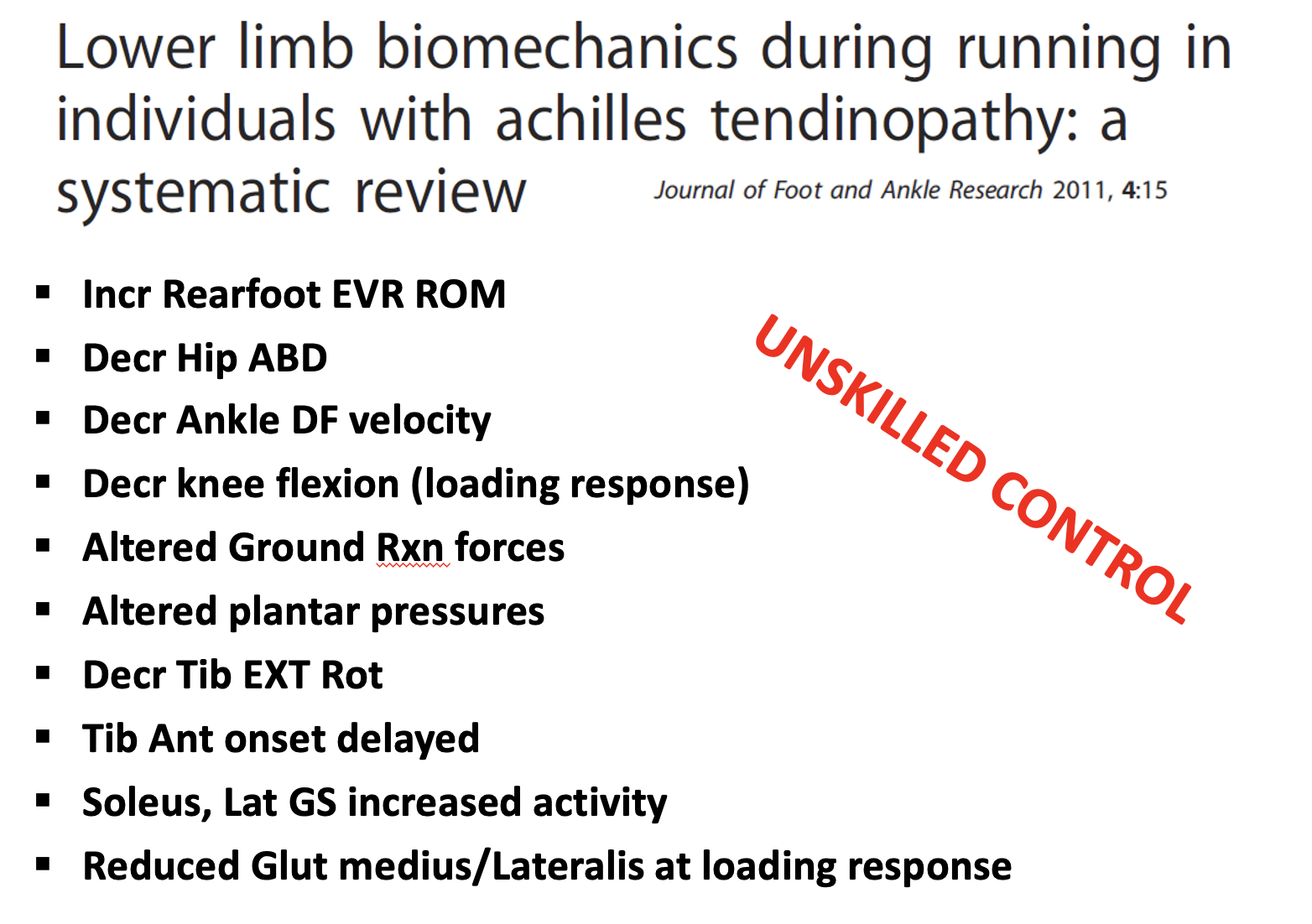
In my career, I’ve had the luxury of using fancy lab tools to analyze thousands of runners. And when we look at people with achilles problems, we see they do a poor job of controlling and stabilizing their body. For my clinicians out there, this reference below sums this up nicely. You can see that its not just an isolated problem with the achilles. These athletes do a poor job controlling forces in the foot, knee, and hip compared to healthy runners.
Identifying the Problem
Brigdes, Arches, + Feet
So yes, everyone is seeking strong tendons, but its REALY critical to fix the control problem that created the stresses in your tendon in the first place. Let’s build an analogy. Bridges are built so that they have an arch to create strength and dissipate load. This keeps your car safe as you and thousands of others drive across each day. Your foot has an arch too. A strong stable arch creates a foundation to steer your foot straight during thousands of strides on your run. And the achilles connects to the back of that arch. If you show up with a stable forefoot, you’ve built a solid foundation for a strong and stable at push off. And the calf and achilles anchored to the opposite end tolerate those high loads each and every stride. But if you show up with a poorly controlled foundation, the forefoot and rearfoot twist on each other…that arch in your foot is unstable, and the upstream knee and hip also move out of control. Your achilles tendon gets put into a longer position that impairs the tissue from storing and releasing elasticity – which increases strain inside the achilles. This control problem is what creates a lot of the breakdown in body control that is responsible for achilles overload.
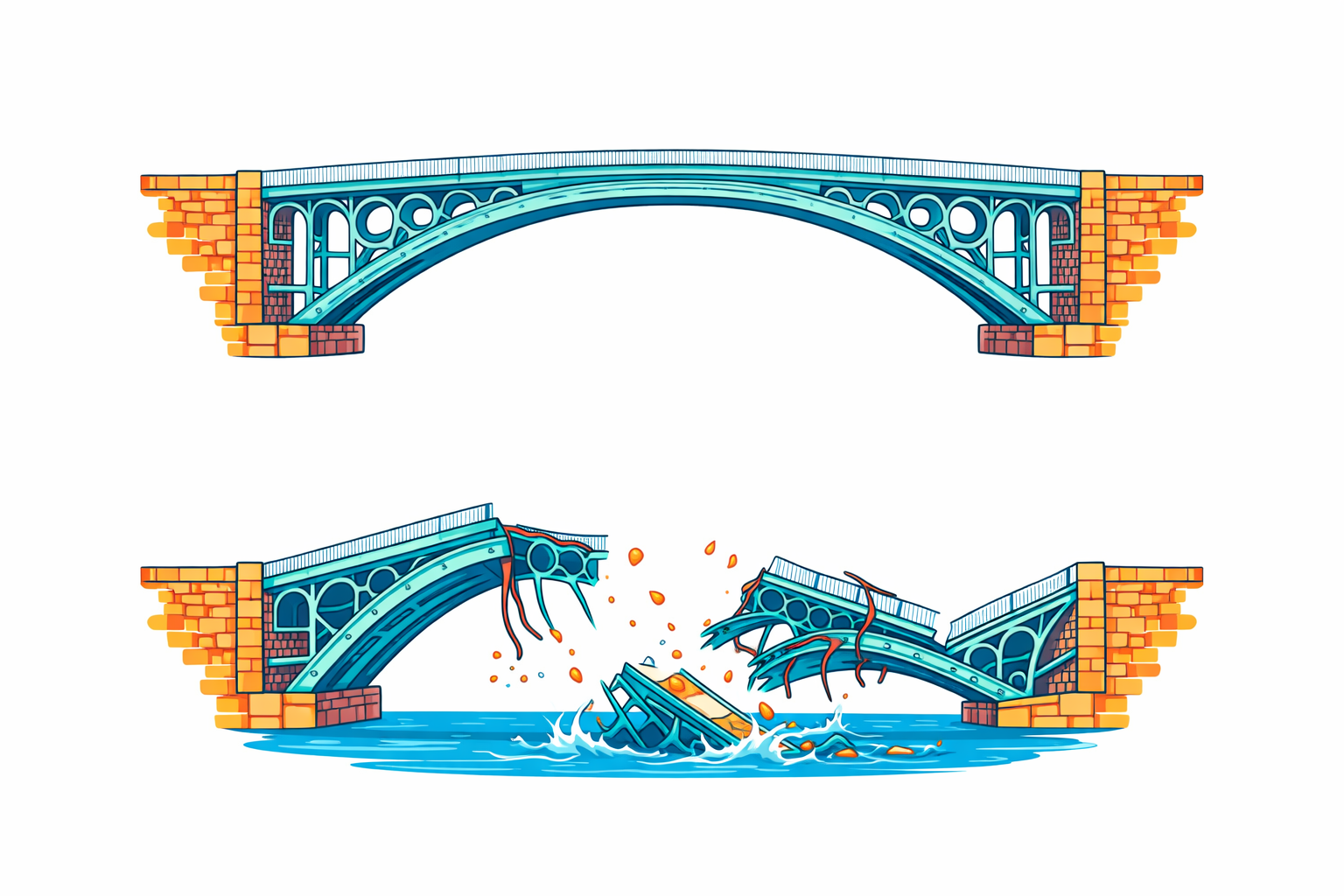
You are a Tendon: Which bridge would you rather cross? The bridge above is STABLE and can support the loads. The bridge on the bottom has collapsed and cannot support the loads. Your foot is the bridge, and the achilles tendon needs a stable platform form which to work!
Fixing the Foundation
Sure we want to optimize the strength of the achilles itself (and will go more into this next month in part 2!!!). But the aim-of-the-game for achilles is to build your foundation….Just as we want a stable bridge to drive over, we need a stable foot by building a specific strategy within your feet. We always start with building GREAT control via the “foot 6-Pack” exercises. This stuff isn’t just “going through the motions.” You should move with skilled and refined control, and should look as stable as our models in our exercise videos. This is not a time for rushing through things! And when you’ve mastered those, then its time to step up to the more advanced exercises. Why? Well – we don’t just train feet, we train people. That’s why I designed MOBO to be used while standing: to integrate your feet with your body. We’ve got more to build on in December for part 2, but I hope we set the stage here, and got you motivated to get consistent with your stability work.
How often should you MOBO? Like we always say – do it often in small doses. Aim for 8-15 min most days a week. Consistency always wins!