
Why Does My Achilles Hurt?: Part 2
You want a healthy achilles for all the things that you love to do. Well, we want the same thing for you! The life we lead and sports we do requires your body to “show up READY!” If you do, you crush it. If you don’t, well…..you wind up injured and reading things like this email to help you get back in the game. I’m your coach, and its time to get off the bench!
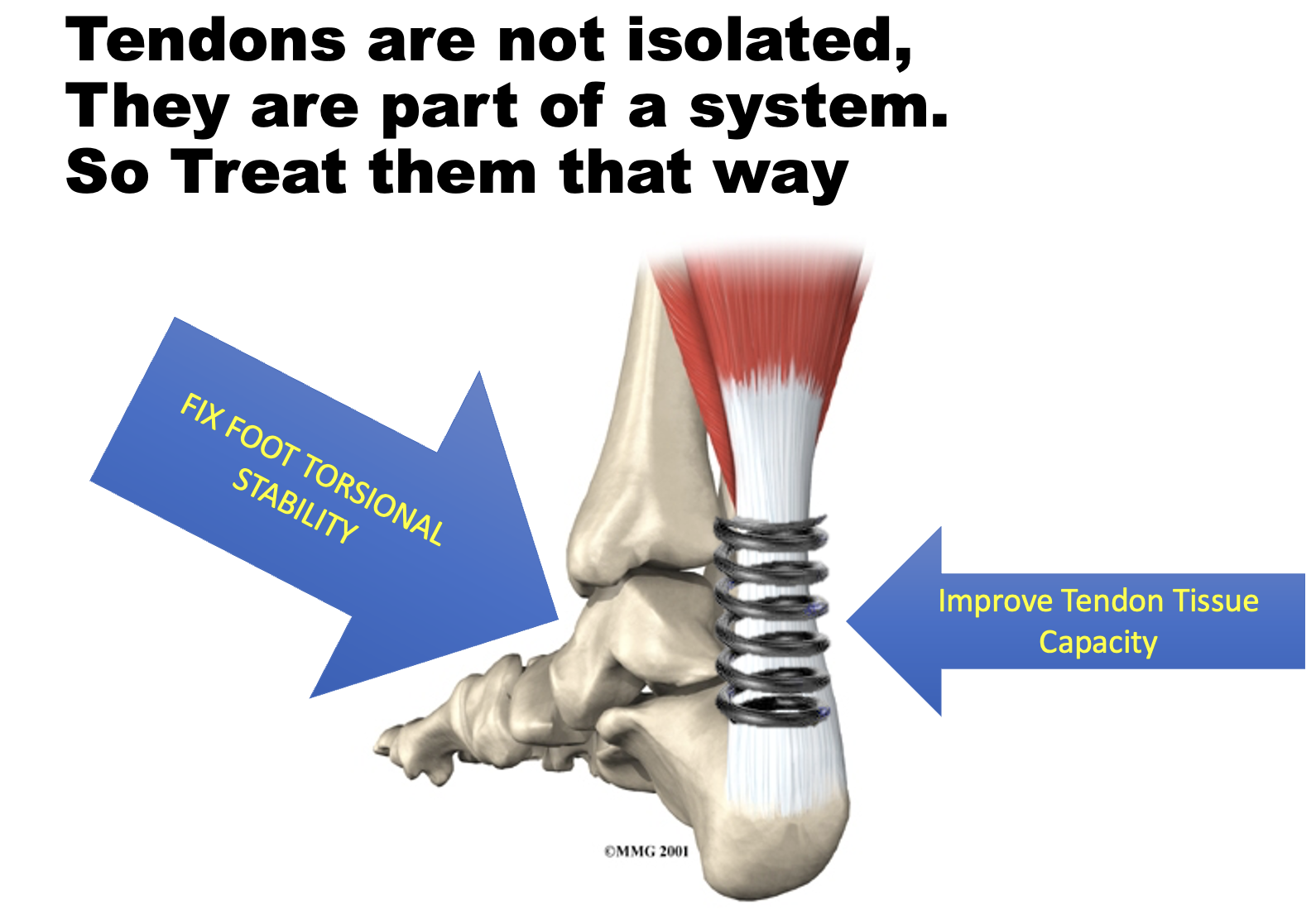
Last month (please read the last email to refresh your memory!) we highlighted the BIGGEST issue surrounding tendon health. Yes, we all want strong tendons, but we must focus on the REASON your tendon got overloaded in the first place. From a biomechanics standpoint, that means fixing the FOUNDATION! If your foundation (your foot) isn’t solid and stable to transmit all that elasticity from your rubber band (your achilles tendon) then the strain increases past the safe limit, and your body breaks down. Fixing the control problems in your feet are critical and hopefully you left that email ready to prioritize STABILITY work in your training.
So is that it? Nope -as promised, there’s a part 2. Our goal is to put a BETTER, STRONGER, and more ROBUST tendon on top of that foot!
Looks Matter!
If it doesn’t LOOK good, it won’t WORK good
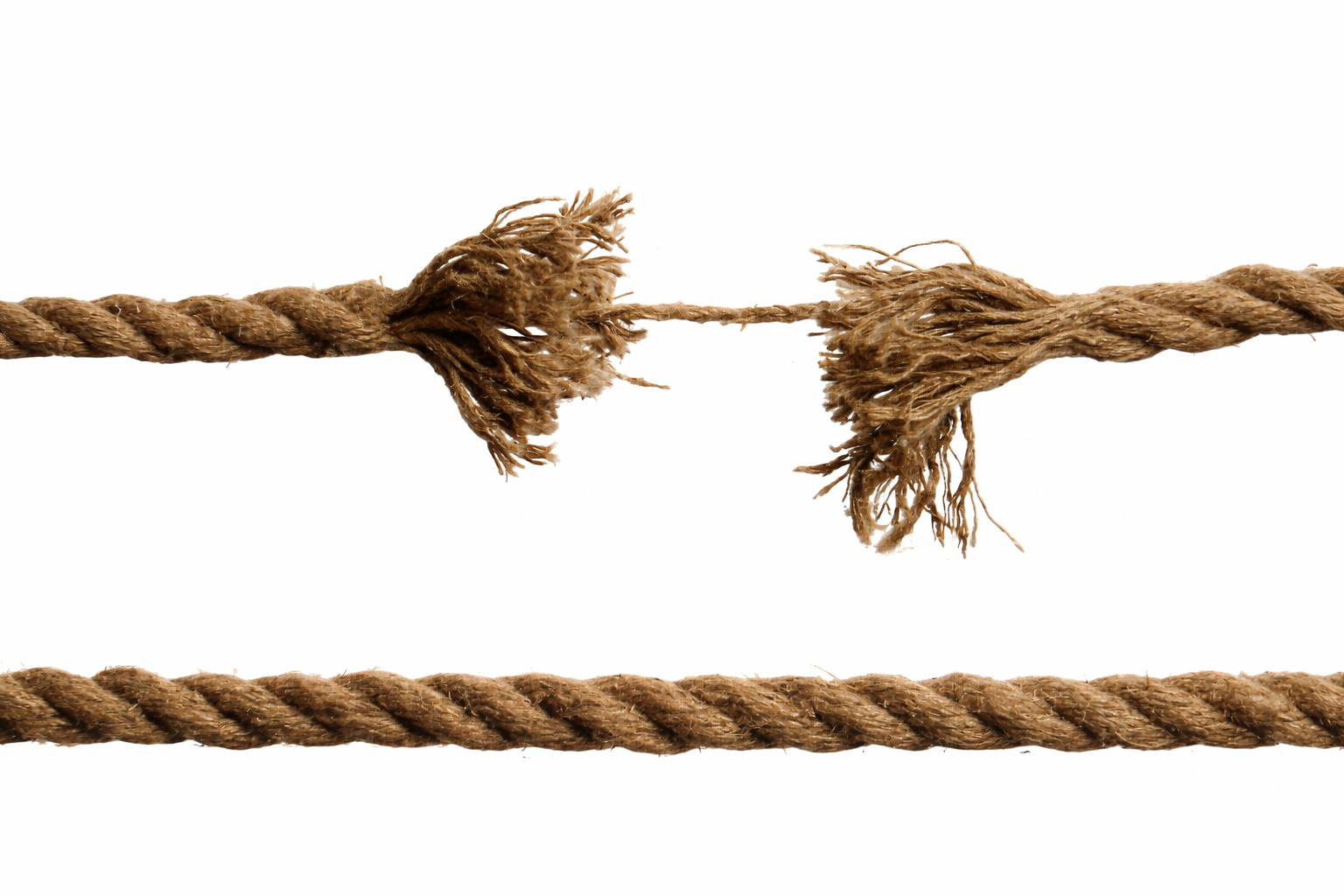
Let’s say you are going rock climbing, and your friend asks you for a belay. Would you grab a climbing rope that looks like the top one? or the bottom one?
Assuming you like your friend, you’d likely chose the “best” rope. I think its pretty obvious that looks matter. The one that LOOKS weaker really is weaker! You’d obviously pick the more intact rope to ensure your friend is safe. This is actually the same story with tendons!
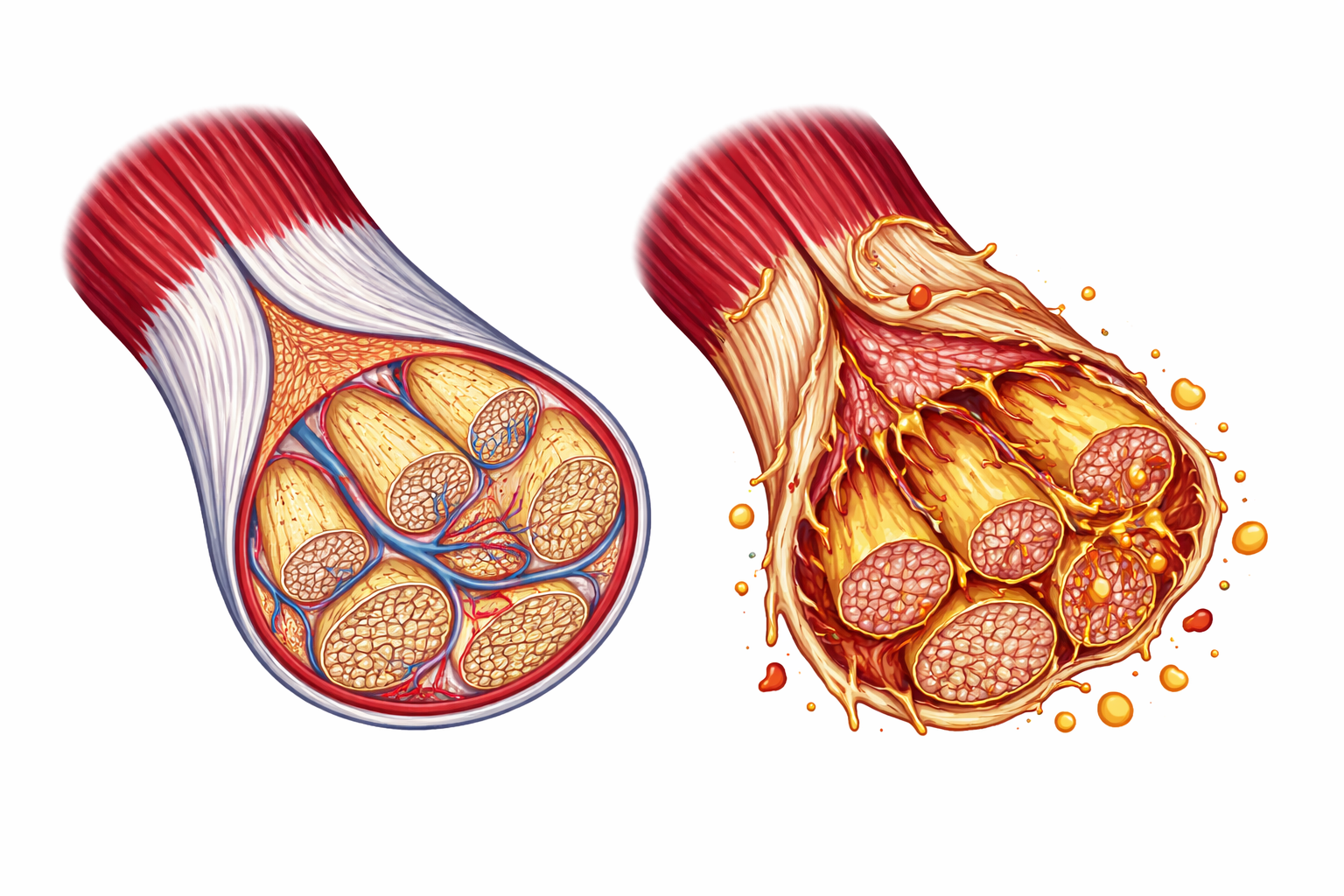
Here’s a drawn cross section of a tendon. Let’s narrow in on the Left vs Right. On the LEFT of this pic, we see a very solid, intact, repeatable structure. The tenocytes (the cells of the tendon) are aligned well, and anchored as they should be within the structure of the tendon. Thus if you yank on them (remember, tendons are big rubber bands that stretch and recoil) they can tolerate those loads well. Yea!
But on the RIGHT, things look a little different. If we could use one word, we’d say they are "disorganized”. The structure anchoring the cells together isn’t intact. The cells aren’t set up to tolerate that the incredibly high loads they’ll be given. So you keep doing your thing, which keeps loading the tendon, but the structure of the tendon has degraded to the point where its a losing battle. OUCH!
If it looks good, it can tolerate high load and high volume. If it looks bad, it can’t tolerate those type of loads. Let this visual sink in!
Healing: the Flag of Surrender

There’s a chemical in your bones, muscles, and most other tissues in your body called “Substance P”. Not P-Ditty, Not Puff Daddy, Just Substance P. When you damage bone or muscle, Substance P gets called to action - it waves the white flag of surrender and says “Help! we are broken, and need to fix things over here”. It starts a healing process called the Inflammatory Cascade. The troops (other repair cells) are called in to repair the damage. And that’s a good thing!
Tendon Healing: No Flag
OK - here’s one of the MOST critical aspects about tendons that you REALLY need to know: Tendons are capable of healing, but do not initiate it on their own like bone and muscle. If you damage bone, it will heal….even if you do nothing. If you damage muscle, it will heal….even if you do nothing. Yes, there are strategies to improve the rate of muscle and bone healing, but if you damage bone and muscle, the healing process with turn to ON.
Tendon, on the other hand, has no Substance P. Thus the Inflammatory Cascade never occurs. Tendons can’t swell (thus treating them with a steroid injection yields ZERO help for the tendon - run away from steroid injections. They don’t work on tendon, and can actually create serious long term damage). The switch to call in the troops never happens. The repair process never happens. You never get a better tendon. And you never get back to doing what you love.
All or None vs Progressive Overload
Let’s be honest here. When tendons hurt, most of us follow an “all or none” approach:
We go into denial and take some type of pain meds to mask the pain. While they reduce your sensitivity and perception of pain, this does NOTHING to improve the health of your tendon.
When it gets really bad, we rest. But rest offers NO HELP to a damaged tendon. Since Substance P isn’t there to start the repair process, there’s NO IMPROVEMENT in your tendon.
After a few days of popping pills and rest, we jump right back into training expecting some type of miracle. Those of you with chronic tendon issues know we just keep repeating this cycle over and over.
Work with me here - you took no active role to IMPROVE the health of the tendon. That’s why you aren’t getting better. Instead, let’s take an active role, and build you BETTER!
Instead of all or nothing, let’s take a look at PROGRESSIVE OVERLOAD to improve tendon health, and highlight the problems that a lot of people run into in this process. Like always, the details do matter!
The RIGHT way to REPAIR a Tendon
Every tissue in your body responds to a specific type of stimulus. The cool thing about tendon is that it WILL heal, but we need to be specific about the type of INPUT we give to your body turn on the repair process.
I’m going to summarize a lot of the techno-stuff here really briefly: The initial focus of tendon repair shouldn’t be on heavy sets and reps, but rather on MOTION.
In 1998, Alfredson and colleagues published a paper using eccentric calf raises to rebuild tendon health. The paper had really good outcomes, and offered a framework for clinicians across the world to follow. An over the next few years, everybody with achilles tendon pain was doing these things. Most were doing them wrong (remember that stability stuff we discussed? If you have poor foot control, you can wind up with a lot of wacky foot motion and actually create other soft tissue injuries in the process….Adding retrocalcaneal bursitis on top of achilles pain is really no fun….). And a lot of people started doing them a lot of them with a ton of weight (remember the all or none thing - ha!), and then had pain, and then stopped and did NOTHING.
Remember, if you do nothing, you’ll earn nothing. And if you put a TON of volume on top that disorganized climbing rope you call a tendon, you’ll fail and earn nothing. So instead of doing nothing, let’s do something. The current research shows that you don’t need a specific protocol of isometric, then eccentric, then concentric exercise to kickstart those tenocytes into repair mode. Instead of LOAD first, you really just need MOTION first. Load comes later.
Flipping the Light Switch
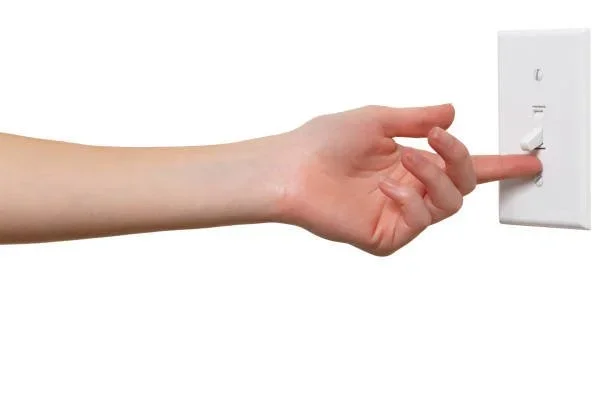
All cells have a wall around them. And in the walls of your tenocytes are proteins that resemble light switches. Look back at the cross section picture I showed above with the cells adjacent to each other. As you MOVE your tendon, tenocytes shift on top of each other. This shifting creates compression, tension and gliding that toggles the light switches. When the light switches get turned on, they kick the repair process into action. It doesn’t take 100 lbs or 300 lbs of load on your back - it just takes MOVEMENT. This movement creates a phenomena called mechanotransduction - where the movement creates a chemical cascade to repair your tendon.
Dr Khan says: “Patients think that the heel raises are trying to strengthen the calf muscles. Its not. We are using movement as a repair method to cue tendon repair.”
Putting This into Action
OK - let’s get tackle all the “what if’s” that I deal with all the time to ensure this science works for you!
Movement will start the healing process. That doesn’t mean it needs to be FULL movement. Depending on where you are in the healing process, that motion may be really small if things are really acute. Or it may be a bigger motion of you are further along the healing timeline. The key thing is to keep the tissue as active as you can, without pushing it too far.
Defining too far. We all know the drill - your therapist or coach said to do 30 reps. You did that, and the next day you had more pain, and said to yourself that it didn’t help and you are going to do nothing but rest. Read above. Rest doesn’t help a tendon. Movement does. So how do you know if you are doing enough? how do you know if you’ve done too much? I need your help with this one.
Use a pain scale. Think about 0 to 10 pain. 0/10 is normal. 10/10 is excruciating. SOME pain is actually ok for a tendon. If you are in the 0-3/10 pain scale range you are where you should be in terms of reps of movement. So here’s BAD scenario. Your achilles is about a 3/10 pain. Someone says to do 40 reps. You do all 40 on day 1, and the next day you pain spikes to 7/10. Due to increased pain you decide that its a bad idea to do that exercise WRONG! Here’s a BETTER scenario: You are in 3/10 pain. Someone advises you to do 40 reps, but we are going to work up to that 40 reps. In fact, the first day you only do 18 reps. And the next day, you feel still like you are in the 3/10 pain scale range. Great - so that next session you do 30 reps. The next day you are in 5/10 pain. Instead of quitting altogether, the next session you drop it to 20 reps, and are back in the optimal 0-3/10 window for healing. YOU are a very important part of this decision process - so talk to your therapist about the dosage to get it right for where you are in the healing timeline.
Quality matters. Remember our previous email. Poor stability and sloppy movement puts tissue in higher positions of strain. That’s why your tendon got angry to begin with! If you put sloppy technique into these exercises, it will make it much harder to progress. If your foot control is so poor that you can’t do a proper heel raise, then take time to build the foundation WITHOUT any type of heel raise work for a while until you can push off with good technique. Look at the Foot 6-pack exercises and REALLY own the details of each exercise.
GOAL DOSE: Remember - everyone starts somewhere. You may be super acute and your movement may be just pumping your ankle in the air. Or you may be still incredibly active in sport, but dealing with chronic tendon pain. Knowing that the pain scale will dictate how quickly we progress, we can start with the end in mind. For optimal tendon strength and integrity, we’d like to build up to 25-30 reps of work, done with heavy load. And movement speed is critical. You are looking to take about 4-6 seconds to do EACH rep. This slow speed will prevent the rubber band from being elastic and ensure a more even stress distribution through the tendon fibers. They need load to achieve greatness!
Your Turn to Act
Build the foundation. I’ll say it again - master the Foot 6-Pack series. Aim for 8-15 min most days. week. These will not load your achilles much, so you can do them even if your achilles is angrier than most. But they will build your feet!
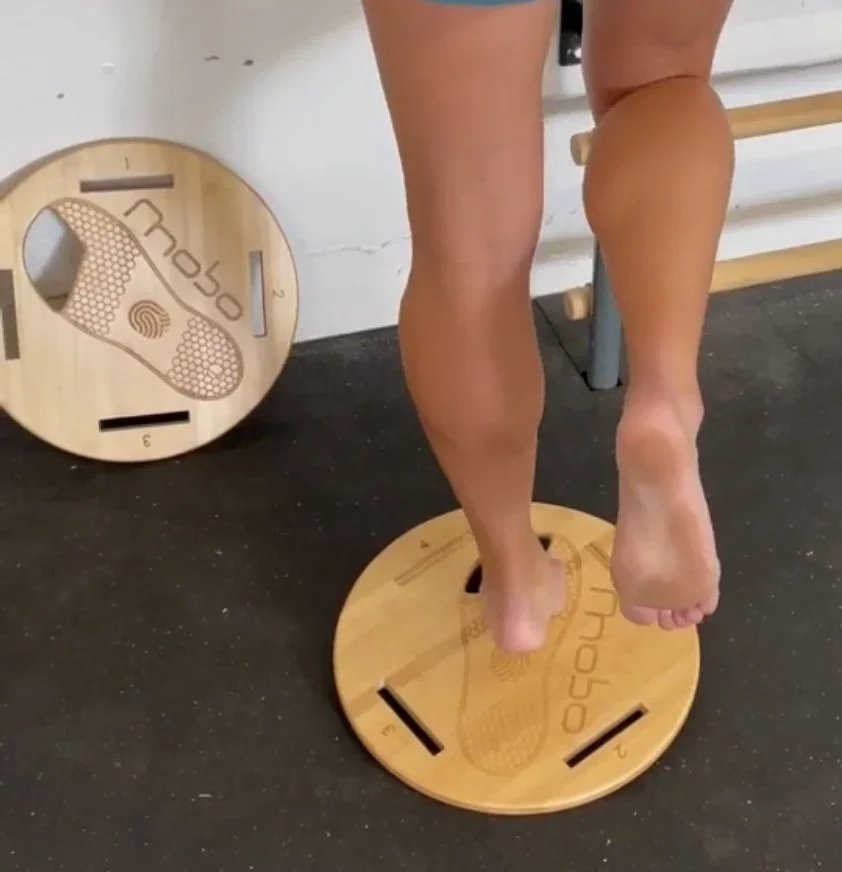
Get that achilles moving! The MOBO Calf Raise is GREAT option. The cut out in the board cues you to stabilize the foot correctly as you move up and down. This means you can get your achilles moving without making anything else angry. Fins go in forward slots - board will be tilted statically like a slant board. Using the rules we discussed above, work up to 25 reps, and adding weight when appropriate. Keep movement SLOW (4-6 seconds each rep).
A Podcast Worth Listening to:
If you’ve made it this far, thanks. I know this was a LOT. But not everything in life can be fixed by a cute 20 second story on social media. I aim to give you best info so you can help yourself BEST.
For some, this is enough. For others, you' may want more. Instead of me babbling this time, I’m going to offer you links to a Podcast with Dr Karim Khan as well as Dr Jill Cook. There’s more knowledge in these than you learned in all your years of school